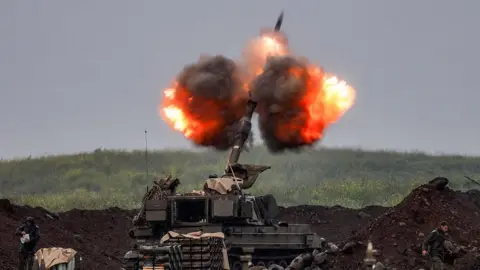
The Israeli military says plans for the expansion of ground and air attacks against the Lebanese armed group Hezbollah have been approved, amid fears in Lebanon that Israel is preparing a large-scale ground invasion of the country.
Israel has intensified its campaign against Hezbollah, an Iranian-backed militia and political party, after the group fired rockets into Israel earlier this month amidst the ongoing war between the US and Israel against Iran.
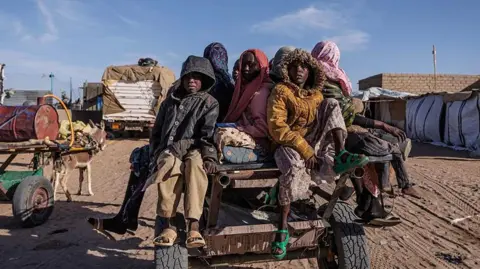
Since then, more than 1,000 people have been killed in Lebanon, according to the Lebanese Health Ministry, including at least 118 children and 40 health workers. More than a million people have been displaced, which could lead to a major humanitarian crisis.
Israeli officials state that the aim is to protect communities in northern Israel from Hezbollah attacks. Recently, Israeli military chief Lt. Gen. Eyal Zamir approved plans for targeted ground operations and strikes against Hezbollah, marking this as a prolonged operation.
This escalation follows a directive from Defence Minister Israel Katz, ordering Israeli forces to destroy crossings over the Litani river used by Hezbollah for military reinforcements. Israeli airstrikes have already targeted key infrastructure, including the Qasmiye bridge that connects southern Lebanon to other regions.
Concerns in Lebanon persist that Israel aims to isolate the southern region, a Hezbollah stronghold, as part of broader military objectives. President Joseph Aoun condemned the Israeli strikes as a prelude to a ground invasion, describing them as a collective punishment against civilians.
Hezbollah's response has been rooted in retaliatory actions, ignited by the killing of Iranian Supreme Leader Ayatollah Ali Khamenei. The current tensions stem from a complex history and conflict trajectory following the group’s prior assaults on Israel and continuous Israeli strikes on Lebanese soil.
In this ongoing crisis, humanitarian implications grow severe as civilian casualties mount and the risk of increasing sectarian divisions looms large in a fragile socio-political landscape.