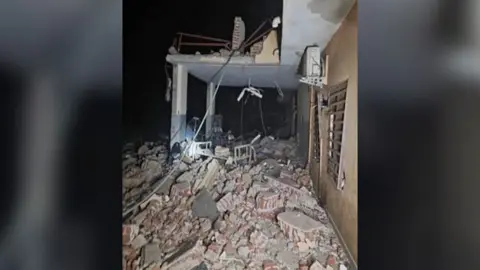
Sudan's army has vehemently denied claims that it was responsible for a deadly strike on a major hospital on Friday night in el-Daein, a city controlled by its rivals, the paramilitary Rapid Support Forces (RSF). The attack resulted in the deaths of 64 individuals, including 13 children, two nurses, and a doctor, with an additional 89 people injured, according to the World Health Organization (WHO).
Dr. Tedros Adhanom Ghebreyesus, the director of WHO, expressed deep concern and called for an end to the ongoing conflict that has already claimed countless lives in Sudan since its inception nearly three years ago. He posted on X, stating, Enough blood has been spilled, urging the conflicting parties to cease hostilities.
The RSF claimed that a military drone strike hit the el-Daein Teaching Hospital on a day when Muslims were observing Eid, creating a stark juxtaposition against the backdrop of celebration and peace.
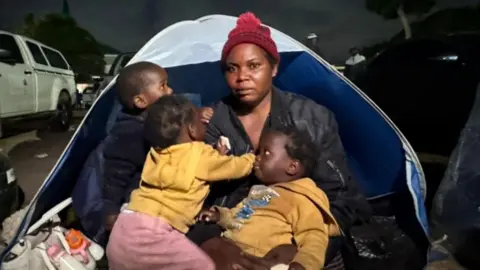
Since the outbreak of civil war in April 2023, the conflict has escalated dramatically. More than 150,000 people have died, with nearly 12 million displaced—an alarming statistic that underscores the humanitarian plight in Sudan, described by the United Nations as the world's largest humanitarian crisis.
Dr. Ghebreyesus noted that el-Daein Teaching Hospital is now unable to function, depriving thousands of necessary medical care. He emphasized the frequency of attacks on healthcare facilities, revealing that WHO has confirmed over 2,036 casualties from 213 assaults on health services, including the recent hospital strike.
In response to the grave accusations, the military expressed surprise at being implicated, insisting that it adheres to international norms and laws. The Emergency Lawyers group has called for an urgent and thorough investigation into the attack, pushing for accountability for those responsible.
Amid the chaos, local rights organizations underscored the hospital’s vital role in serving the community, as well as the extensive damages incurred, including the destruction of essential medical equipment.
Despite ongoing discussions for peace led by the United States, a resolution seems distant. The conflict remains one of the deadliest in Africa for civilians, with muted celebrations for Eid across the country as a grim reminder of the situation's severity.
Dr. Tedros Adhanom Ghebreyesus, the director of WHO, expressed deep concern and called for an end to the ongoing conflict that has already claimed countless lives in Sudan since its inception nearly three years ago. He posted on X, stating, Enough blood has been spilled, urging the conflicting parties to cease hostilities.
The RSF claimed that a military drone strike hit the el-Daein Teaching Hospital on a day when Muslims were observing Eid, creating a stark juxtaposition against the backdrop of celebration and peace.
Since the outbreak of civil war in April 2023, the conflict has escalated dramatically. More than 150,000 people have died, with nearly 12 million displaced—an alarming statistic that underscores the humanitarian plight in Sudan, described by the United Nations as the world's largest humanitarian crisis.
Dr. Ghebreyesus noted that el-Daein Teaching Hospital is now unable to function, depriving thousands of necessary medical care. He emphasized the frequency of attacks on healthcare facilities, revealing that WHO has confirmed over 2,036 casualties from 213 assaults on health services, including the recent hospital strike.
In response to the grave accusations, the military expressed surprise at being implicated, insisting that it adheres to international norms and laws. The Emergency Lawyers group has called for an urgent and thorough investigation into the attack, pushing for accountability for those responsible.
Amid the chaos, local rights organizations underscored the hospital’s vital role in serving the community, as well as the extensive damages incurred, including the destruction of essential medical equipment.
Despite ongoing discussions for peace led by the United States, a resolution seems distant. The conflict remains one of the deadliest in Africa for civilians, with muted celebrations for Eid across the country as a grim reminder of the situation's severity.