In brief
The BBC's documentary 'Mr Nobody Against Putin' highlights the increasing patriotic messaging in Russian education. Families grapple with the implications of state-led propaganda, as parents like Nina and Marina share their dilemmas about instilling alternative values in their children while facing potential societal isolation. Experts weigh in on the long-term impacts of indoctrination amidst a restricted information environment.
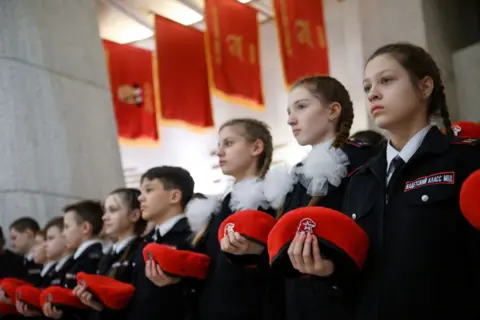
In recent years, Russia's educational system has transformed dramatically, focusing heavily on instilling patriotic values through various state-sponsored initiatives. This change has caught the attention of the global community, particularly through the Oscar-winning documentary 'Mr Nobody Against Putin,' which exposes the lengths to which the state goes to promote its agenda within schools.
In the film, families like Nina's are shown struggling with the pervasive culture of patriotism that permeates their children's schooling. When Nina's daughter was assigned a poem celebrating Russia's 'glorious army,' she felt overwhelmed by the intensity of the propaganda. Nina has been attempting to protect her daughter from the flood of state-driven narratives while recognizing that her child finds pleasure in participating in patriotic activities.
Nina expressed concerns that openly opposing school activities might lead to her daughter feeling isolated from her peers. This is a common fear among parents in Russia, where dissent against state policies can invite scrutiny. Despite her own reservations, she does not wish to undermine her daughter's social connections.
The documentary draws on footage from Pavel Talankin, a primary school events coordinator from Karabash, who documented the indoctrination processes in the wake of the full-scale invasion of Ukraine. His footage revealed the integration of compulsory state narratives into lessons, flag-raising ceremonies, and access to state-approved educational materials that paint a favorable picture of the government and its military actions.
As families navigate this landscape, experts like psychotherapist Anastasia Rubtsova emphasize the importance of striking a balance. They suggest parents should focus on universal human values without directly confronting the narratives imposed by schools, all while each family works to frame a narrative that both acknowledges and counters the propaganda their children are exposed to.
This predicament is clearly illustrated in the stories of children like Maksim, who enthusiastically shares what he learns about military preparedness in school, unaware of the broader implications of his education on his worldview. His mother, Marina, mirrors Nina's sentiments in her own reluctance to voice anti-war opinions in front of her child, fearing repercussions.
The core issue raised by the documentary and echoed by families across Russia remains whether these state-sponsored teachings can truly shape enduring beliefs in children. Scholars point out that early years are critical for forming attitudes, but when faced with a tightly controlled information environment, the long-term effects remain uncertain.
As Russian authorities seek to foster a sense of loyalty and patriotism among the youth, the documentary shines a light on the complexities and challenges faced by families trying to counteract these messages. The pervasive nature of state propaganda raises essential questions about the future mindset of the younger generation and the implications for Russian society as a whole.