India's Supreme Court is currently deliberating on controversial petitions challenging the Places of Worship (Special Provisions) Act of 1991, a law that preserves the character of religious sites as they were on August 15, 1947, when India gained independence. This legislation prevents alterations, conversions, or legal disputes regarding the status of places of worship, with a notable exception made for the Babri Masjid case, which was allowed to proceed due to prior legal challenges.
The Babri Masjid, built in the 16th century, has a tumultuous history that culminated in its demolition by Hindu extremists in 1992, an event that sparked widespread riots and unrest throughout India. A Supreme Court ruling in 2019 awarded the disputed land to Hindu claimants, permitting the construction of a temple and intensifying ongoing debates regarding India's religious and secular fabric.
The recent petitions, including one from a Bharatiya Janata Party (BJP) member, assert that the 1991 law violates religious freedom and impedes constitutional secularism. Several Hindu nationalist groups have initiated claims to contest the status of various mosques, alleging that these structures were erected atop demolished Hindu temples, thus complicating the already fragile dynamics of India's religious communities.
The law has garnered defense from opposition parties and Muslim advocacy groups, asserting that it plays a vital role in safeguarding the rights of religious minorities in a predominantly Hindu nation. Critics of the petitions fear that dismantling or weakening the law could provoke a surge of similar lawsuits, potentially igniting further clashes between communities.
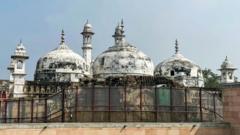
In a recent development, the Supreme Court mandated a pause on any new court cases aiming to contest the ownership of places of worship or conduct surveys to determine their current status until further notice. This case will return to the Supreme Court in February, where the broader implications for numerous contested sites, particularly mosques like Gyanvapi and Shahi Eidgah, will be addressed.
The backdrop of this controversy stems from a period when the Places of Worship Act was introduced amid a surge of religious nationalism and violence linked to the Babri Masjid dispute. At that time, then Home Minister SB Chavan expressed concerns about increasing incidents of religious intolerance and "forcible conversion" of places of worship by vested interests, ultimately leading to the Act’s introduction to prevent further escalation of inter-religious tensions.
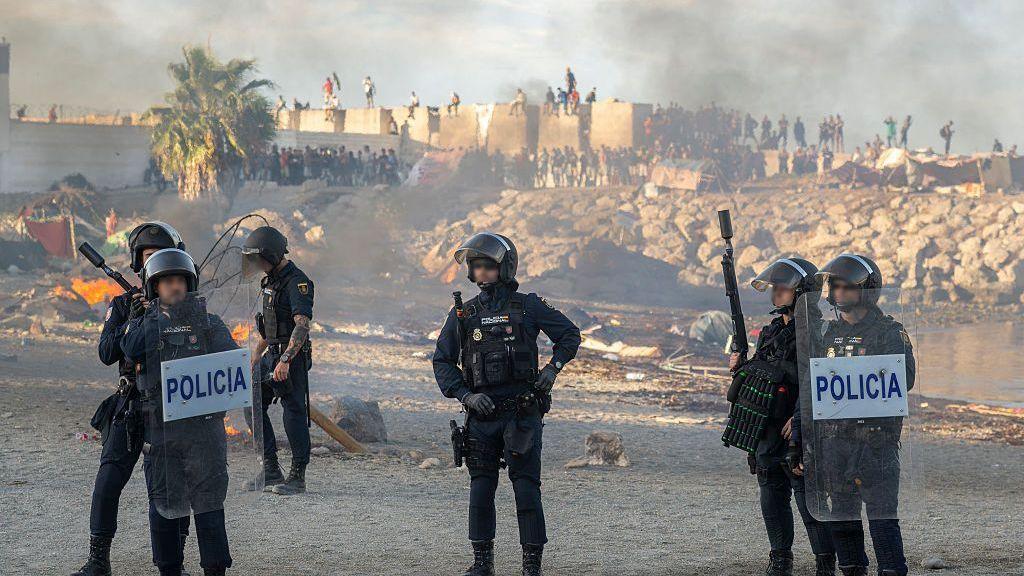
In recent weeks, tensions have flared in relation to various religious sites across India. For instance, a Rajasthan court admitted a petition claiming that the revered Ajmer Sharif dargah, a significant Sufi shrine, is situated on the remnants of a demolished Hindu temple. Violent confrontations erupted in Sambhal over a survey of a 16th-century mosque last month, highlighting the volatile atmosphere surrounding these disputes.
The ongoing hearings and legislative discussions pose critical questions about India's religious identity and the line between preserving historical integrity and promoting religious freedoms. With the 1991 law's future uncertain, observers caution that its alteration could lead to a dangerous chain reaction of litigation, hostility, and interfaith conflict that may haunt India's socio-political landscape for years to come.