In brief
After tens of thousands crossed into Ceuta in late July, violence has erupted between locals and migrants. Protesters have blocked aid, set fires on Trampolino beach, and clashed with police, while rival political factions blame each other for the unrest. Madrid’s government has urged calm and criticized the People’s Party and far‑right Vox for stoking hatred, whereas the local mayor accuses the centre of abandoning Ceuta’s citizens. The crisis exposes governance challenges, the handling of migrant detention, and the fragile sovereignty of the Spanish territory.
A month after tens of thousands of migrants entered Ceuta, tension has turned into violence.
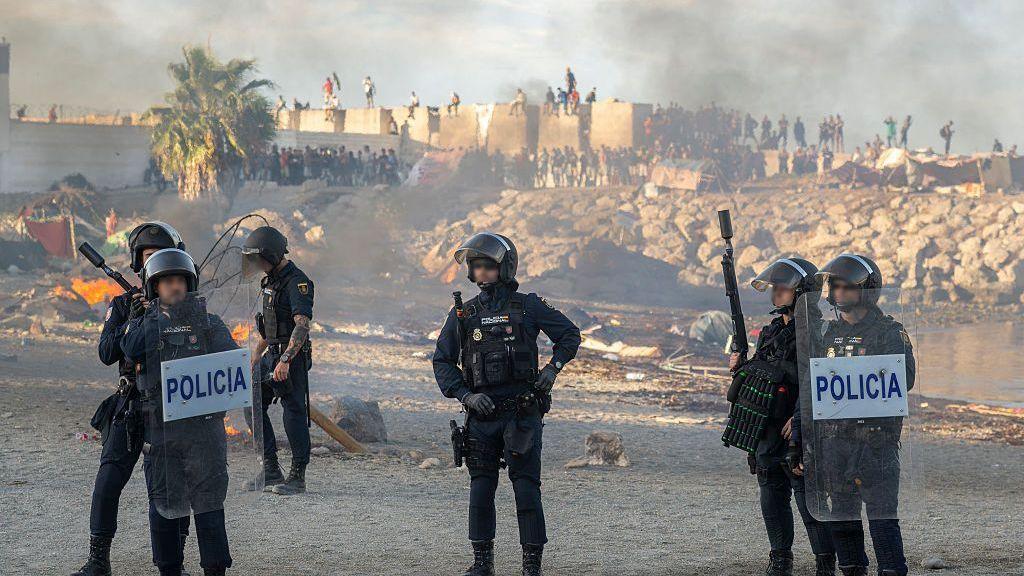
The Spanish exclave on North Africa’s coast has seen locals protest and, in recent days, set fires on the beach where migrants are sleeping.
At least 72,000 people crossed the border in late July, swimming around a fence; at least 100 died during the mass crossing according to the mayor.
Most of those who entered returned to Morocco quickly, but a few thousand—many children—remain, sleeping on the beach and on streets.
Anti‑migrant demonstrations have turned increasingly violent, with protestors blocking Red Cross aid and clashing with police. Madrid’s government has criticised the People’s Party and far‑right Vox for stoking hatred, while local politicians blame the centre for abandonment.
On Thursday, 12 migrants were arrested after throwing stones at a military vehicle; that same morning vigilantes pursued migrants through the streets.
Journalists and film crews have also been threatened.
“This is a city that has been under pressure … who may have felt abandoned,” the mayor, conservative Juan Jesús Vivas, told Antena 3. “The dignity of Spain is at stake in Ceuta.”
Madrid has pleaded for calm, said the socialist‑led government of Pedro Sánchez “does not tolerate rhetoric that stigmatises immigrants”, and demanded responsibility for the crisis.
Spokesmen accused the government of exploiting the crisis for political gain, with claims that Morocco may have played a role, but the Spanish Foreign Minister rejected such allegations and asserted Spain’s territorial integrity.
The situation has exposed how quickly local indignation can turn into violence when migration flows surge, and it underscores the need for coordinated, humane policy responses.