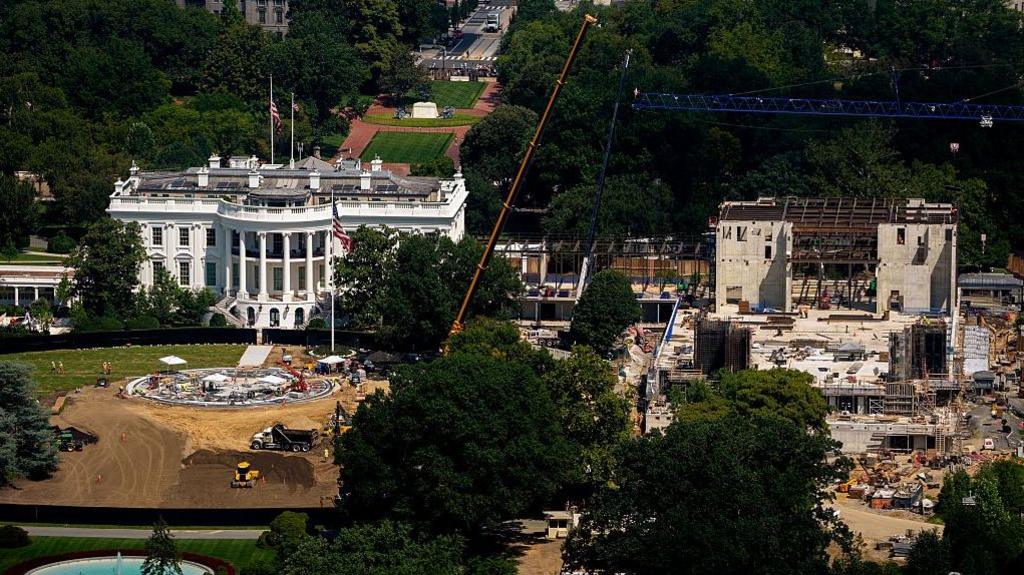
The United States Supreme Court on 31 August 2026 gave the White House authority to continue work on a 90,000‑sq‑ft ballroom, a 400 million‑pound project announced by President Donald Trump weeks ago and halted in lower courts.
Legal context
A 5‑4 ruling lifted a stay that had blocked the construction of an above‑ground portion of the building, which had been challenged by the National Trust for Historic Preservation. The court rejected the argument that the president does not have unilateral power to rebuild the residence without congressional approval. Chief Justice John Roberts, in addition to the three liberal justices, dissented, calling the construction likely unlawful until the project receives congressional oversight.
Trump’s reaction
Trump posted on his feeds that he was “pleased” the lawsuit failed and that the a new ballroom would be “one of the greatest ever constructed in Washington, DC.” He said the project was a response to security concerns following a reported assassination attempt at the White House Correspondents’ Association dinner.
Preservation concerns
The National Trust for Historic Preservation warned that the demolition of the historic East Wing and the new ballroom would cause irreversible damage to a landmark that dates back to the 19th century. Its statement highlighted the need for congressional involvement before major alterations to the executive residence.
Broader goals
Along with the ballroom and a new helipad on the South Lawn, Trump’s administration is planning renovations to the Lincoln Memorial Reflecting Pool and a planned “Arc de Trump” projected to be larger than Paris’s Arc de Triomphe. These projects reflect a broader effort to reshape Washington, D.C. and enhance presidential security.
Construction continues on a new helipad on the South Lawn of the White House and the East Wing ballroom as of 24 August 2026 in Washington DC.