In a significant development in the ongoing conflict between Israel and Hamas, three Israeli hostages were released from captivity in Gaza on Saturday. The release came as part of a negotiated agreement that also included the release of 183 Palestinian prisoners held by Israeli authorities. The hostages, identified as Yarden Bibas, 34; Ofer Kalderon, 53; and Keith Siegel, 65, were officially transferred to the Red Cross, marking a crucial step in easing tensions between the groups.
The handover was a notable contrast to the chaotic release on Thursday, which was marked by chaotic scenes and a surging crowd that raised concerns for the safety of the hostages. This time around, the process was more orderly, with armed fighters maintaining a protective line between the released prisoners and the gathered crowds, which included emotional family members and supporters.
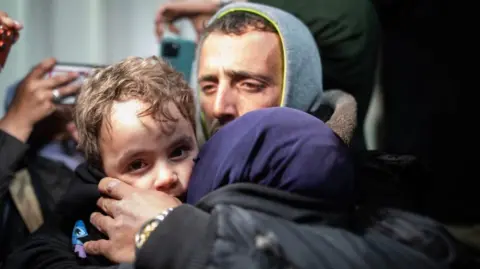
As the hostages appeared in front of a crowd in Khan Younis, they met with a mixture of joy and apprehension. Family members and friends expressed overwhelming relief, as Keith Siegel’s wife, Aviva, described her happiness, and the family of Ofer Kalderon articulated the emotional toll of 484 days of waiting. However, the joy of reunion was tinged with concern for the conditions in which the hostages had returned; Siegel's relatives noted his significant weight loss, creating a sense of bitter juxtaposition amid the celebrations.
In parallel, the release also brought mixed feelings on the Palestinian side, where cheers welcomed the freed prisoners who had spent years behind bars. Each individual who returned shared sentiments of joy and the relief of freedom, even amidst the backdrop of their previous hardships. The Palestinian Prisoners’ Association reported that a portion of those released had received lengthy sentences under what critics of the Israeli justice system refer to as administrative detention.
International observers and officials called for improvements in the security measures around future releases, following the disarray observed during the previous handover. An emphasis on maintaining dignity and safety for both hostages and their families was echoed in statements from the President of the International Committee of the Red Cross.
The release operation coincided with a broader ceasefire agreement instated on January 19, which aimed to facilitate not only the exchange of hostages but also humanitarian aid deliveries into Gaza. The humanitarian situation remains dire, with reports of significant casualties and destruction as a result of ongoing hostilities. The opening of the Rafah crossing to allow emergency medical evacuations marks a critical step forward, yet many displaced individuals are returning to devastated living conditions.
As families on both sides experience the complicated spectrum of release and celebration, the path to lasting peace remains fraught with challenges, underscoring the complex realities on the ground.