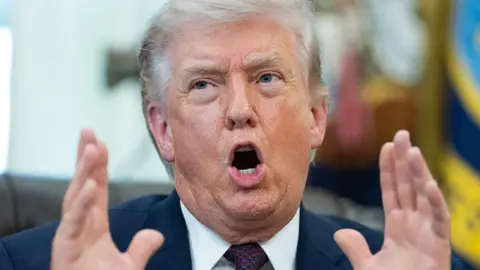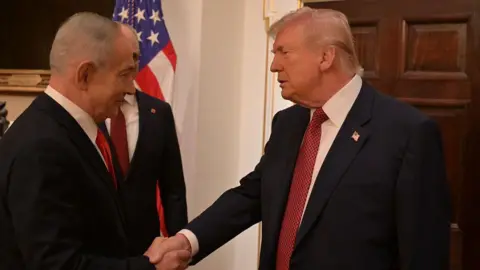
U.S. President Donald Trump said he insisted talks with Iran continue during a meeting with Israeli Prime Minister Benjamin Netanyahu, but warned he may take action against Tehran if a nuclear deal is not reached.
The leaders met at the White House as tensions continue to rise across the Middle East and negotiations intensify over curbing Iran's nuclear weapons programme.
Netanyahu was expected to press Trump to pursue a deal that would not only halt Iran's uranium enrichment but also cut its ballistic missile programme and support for proxy groups like Hamas and Hezbollah.
Iran has suggested it is ready to limit its nuclear programme in return for sanctions relief, but has rejected other demands.
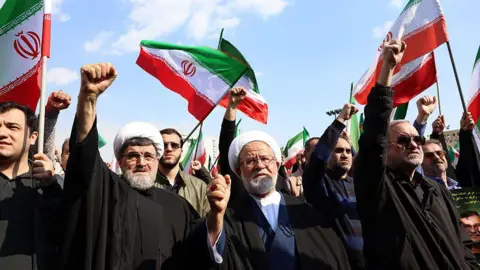
Ahead of the White House meeting, Iranian President Masoud Pezeshkian warned his country would not yield to their excessive demands.
Netanyahu's visit marks his sixth trip to the US since Trump's return to office - more than any other world leader. The leaders spoke for nearly three hours in an unusually low-key meeting in which Netanyahu was brought in through a side entrance, out of view of the cameras. Trump did not hold a press conference with him afterwards.
In a post on Truth Social, Trump said the meeting between the leaders had been very good. There was nothing definitive reached other than I insisted that negotiations with Iran continue to see whether or not a deal can be consummated, he elaborated. He expressed that a deal would be his preference but noted that if one could not be reached, we will just have to see what the outcome will be.
Netanyahu's office stated that the leaders had discussed the security needs of the State of Israel in the context of the negotiations and agreed to continue their close coordination and relationship.
A close Trump ally, Netanyahu has long argued that Iran represents an existential security threat to Israel, pushing the U.S. to curb Tehran's influence in the region. Central to Netanyahu's objectives is ensuring that negotiations include limiting ballistic missiles and ending support for the Iranian axis.
The Iranian president reiterated that his country did not seek to acquire nuclear weapons, insisting on readiness for any verification of this claim.
Israeli officials have also communicated a readiness to take military action against Iran if it does not reach a nuclear agreement with the U.S..
Netanyahu faces pressure from far-right allies in his government to use his ties to Trump to push for a comprehensive U.S.-Iran deal that fulfills Israeli security needs while minimizing concessions to Iran.
Despite heightened rhetoric, former U.S. officials suggest that Trump may wish to avoid direct military conflict with Iran, especially ahead of an election year, keeping the possibility of a diplomatic solution open.