In brief
Leqaa Kordia, the last immigrant detained after a pro-Palestinian crackdown, was released on $100,000 bond after a year in custody. Kordia, who protested against Israeli actions in Gaza, expressed relief at her freedom while vowing to advocate for others still in detention. Her bond was secured after the government failed to challenge the latest ruling.
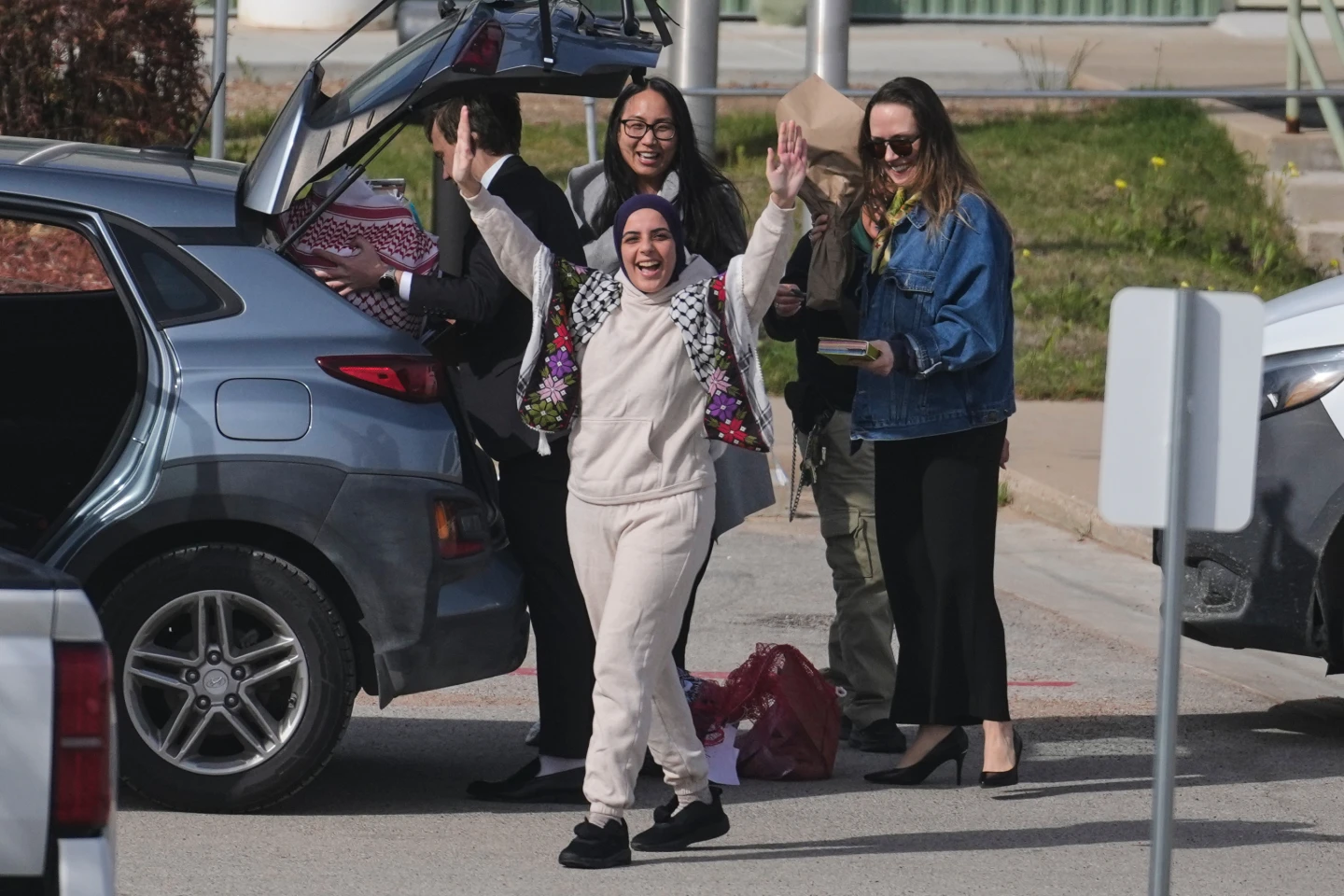
ALVARADO, Texas (AP) — After being detained for over a year due to the Trump administration's crackdown on pro-Palestinian activists, Leqaa Kordia has finally been released on a $100,000 bond.
The 33-year-old Palestinian, originally from the West Bank and living in New Jersey since 2016, was detained in Texas following a protest at Columbia University in 2024. Kordia was among about 100 activists arrested during the demonstration against Israeli military actions in Gaza.
“I’m free! I’m free! Finally, after one year,” Kordia exclaimed joyfully to reporters outside the detention center.
Despite having her release ordered three times by an immigration judge, the government contested the first two rulings. This time, they did not challenge the latest ruling, leading to her release.
During her detention, Kordia suffered health issues, including a seizure that required hospitalization. “We are relieved and grateful at her release,” said her cousin Hamzah Abushaban, highlighting the emotional toll her detention took on the family.
Kordia expressed a poignant desire to return home and hug her mother tightly but also pledged to continue advocating for others detained with her. “There is a lot of injustice in this place,” she said, stressing that many detainees do not belong there.
Following the killings of her relatives in Gaza, Kordia participated in protests as a way to support her family and community. Although the charges against her were dismissed, her arrest was part of a broader immigration enforcement strategy targeting critics of the administration's policies regarding Israel.
The government had accused Kordia of visa overstaying and questioned money transfers she made to family in the Middle East, which she clarified were intended to help them during the conflict. Ultimately, an immigration judge found strong evidence supporting Kordia's claims, leading to her release.
Many advocacy groups continue to scrutinize the implications of Kordia's detention and the broader impact of such immigration enforcement actions on activists and noncitizens.