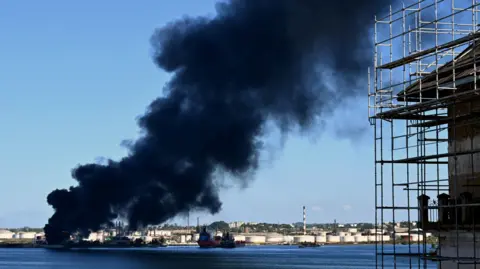
A fire at an oil refinery in Cuba has been brought under control quickly as the country faces a deepening fuel crisis. Black smoke clouds could be seen billowing from the Ñico López Refinery in the capital Havana on Friday. Fortunately, no one was injured, and an investigation into the blaze has been launched, as reported by the country's energy ministry.
The fire occurred near two oil tankers moored in Havana Bay. Cuba's fuel shortage has worsened significantly after the U.S. blocked Venezuelan oil shipments to the island. Venezuela, historically a key ally and supplier to Cuba, was previously believed to send around 35,000 barrels of oil a day before a U.S.-led military raid led to the confiscation of vessels.
This blockage has severely impacted Cuba's energy supply, with electricity cuts disrupting essential services like hospital emergency wards and public transport. Additionally, the aviation fuel shortage has led to airline services being canceled and advisories against travel to Cuba being issued.
In response to the crisis, authorities have introduced fuel rationing within the country and made temporary adjustments to public services. Recently, two Mexican ships arrived in Havana, delivering 800 tonnes of humanitarian aid amid this ongoing predicament. United Nations human rights experts have condemned the U.S. restrictions as an extreme form of unilateral economic coercion, echoing the concerns of UN human rights chief Volker Türk.
The long-standing U.S. economic embargo on Cuba continues to make living conditions precarious and access to essential resources increasingly difficult.
The fire occurred near two oil tankers moored in Havana Bay. Cuba's fuel shortage has worsened significantly after the U.S. blocked Venezuelan oil shipments to the island. Venezuela, historically a key ally and supplier to Cuba, was previously believed to send around 35,000 barrels of oil a day before a U.S.-led military raid led to the confiscation of vessels.
This blockage has severely impacted Cuba's energy supply, with electricity cuts disrupting essential services like hospital emergency wards and public transport. Additionally, the aviation fuel shortage has led to airline services being canceled and advisories against travel to Cuba being issued.
In response to the crisis, authorities have introduced fuel rationing within the country and made temporary adjustments to public services. Recently, two Mexican ships arrived in Havana, delivering 800 tonnes of humanitarian aid amid this ongoing predicament. United Nations human rights experts have condemned the U.S. restrictions as an extreme form of unilateral economic coercion, echoing the concerns of UN human rights chief Volker Türk.
The long-standing U.S. economic embargo on Cuba continues to make living conditions precarious and access to essential resources increasingly difficult.