In brief
Britain and Japan have signed a landmark £18 billion investment pact, allocating £9 billion each to UK finances, infrastructure and offshore wind. The agreement promises thousands of new jobs and signals a new era of cooperation, including joint efforts on the Gcap fighter jet and next‑generation nuclear technology. However, experts warn that the UK economy will face short‑term pain due to geopolitical tensions and potentially rising inflation. The deal arrives as the UK’s growth is sluggish and insurance of the IMF forecasts a severe hit from regional conflicts.
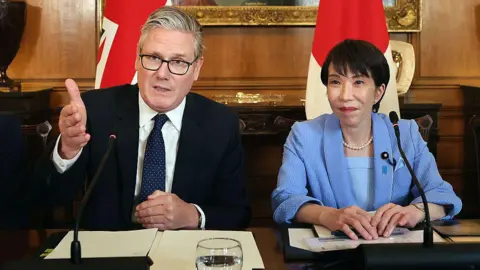
British Prime Minister Sir Keir Starmer and Japanese Prime Minister Sanae Takaichi met at 10 Downing Street to sign an agreement that will see £18 billion flowing into the United Kingdom from Japanese investors. The pact is described by Starmer as the beginning of a “new era of co‑operation” between the two nations.
Japanese firms have committed more than £9 billion to UK infrastructure and financial‑service projects and an equal amount to offshore wind installations. Downing Street estimates that these investments will generate tens of thousands of new jobs and bolster the economy over the next five years.
In addition to the financial commitments, the United Kingdom and Japan reaffirmed their joint participation in the Gcap fighter‑jet programme being developed with Italy, and Rolls‑Royce announced a collaboration with Japan’s Atomic Energy Agency on next‑generation nuclear technology. A technology agreement will link UK research, software expertise and Japanese manufacturing.
While the concrete details of the investment—whether new money or previously planned projects—remain uncertain, the deal is seen as a key stimulus in a UK economy that grew only 0.6 % in the first quarter of the year. Experts predict that, despite the infusion of capital, growth will remain sluggish in the coming months, and that inflation could rise sharply, potentially reaching 6 % in a worst‑case scenario.
The International Monetary Fund has warned that the US‑Israel war with Iran will affect the UK the hardest of advanced economies, and the Bank of England has cautioned that the conflict could drive inflation higher. These risks mean the promised benefits from the investment deal may take time to materialise.
Starmer described the talks with Japanese business leaders as “very productive”, and highlighted Japan’s view that the UK is “an extremely important partner”. Among the firms signalling interest are Mitsubishi Estate, Mitsui Fudosan, and Nomura Real Estate.
Conservative shadow business and trade secretary Andrew Griffith welcomed the investment but criticised Labour’s policy stance, arguing that tax hikes and “employer red‑tape” were harming UK jobs and pushing more people onto welfare.
The economic landscape, already fraught with uncertainty, may find new momentum as the UK and Japan deepen their bilateral ties through this significant investment.