Millions of hopeful medical students across India sat for the National Eligibility cum Entrance Test (NEET‑UG) on 3 May, only to find the paper cancelled after a leak was reported.
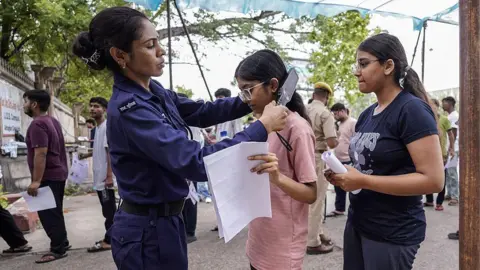
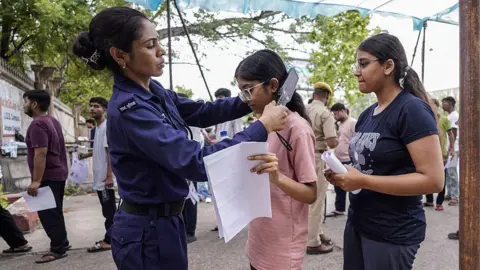
On the banned day, candidates were faced with biometric identification checks, metal detectors, armored patrols and comprehensive frisking as exam centres reopened for the resit.
To eliminate any chance of tampering, the Indian Air Force transported the new test papers to at least 5,440 centres across the country, while police and paramilitary officers staffed each location.
The National Testing Agency (NTA) fitted every exam room with cameras—over 1.3 million in total—and employed 51,311 jammers to block phone signals. Telegram was temporarily banned, flagged as a possible cheating channel.
Additionally, roughly 39,000 frisking staff and 40–50 security personnel were positioned at every centre, enforcing strict dress codes and confiscating items like eye‑glasses and earrings.
Despite the advanced technical measures—biometric gates, drone monitoring and signal jammers—students expressed lingering anxiety, noting that the leak had happened before and that repetition could harm their prospects.
In an interview with Reuters, a student named Diksha said, "There is fear because the paper has leaked once already. This is not a one‑off thing, it happens every year…" He added that the re‑exam is a “good thing” yet a month’s worth of study poses its own challenge.
The leak allegations are now under investigation by the Central Bureau of Investigation (CBI). India has faced similar exam fifticks before, including another NEET paper‑leak in 2024 and a Grade‑12 marking error after a new digital system was introduced.