In brief
In Tehran, the streets reflect a vibrant daily life, yet underneath lies a profound economic crisis exacerbated by war and government restrictions. Interviews reveal a populace coping with job losses, inflation, and the uncertainty of future negotiations. As many express a weary desire for peace, others ponder the chaos of renewed conflict, seeing it as a possible path to economic recovery.
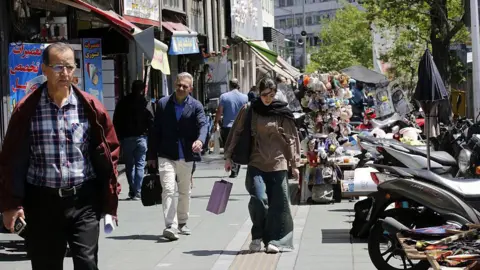
On a bright Tehran spring day, Sanaei Ghaznavi street, with its mix of shops selling groceries and household goods alongside fast food and flowers, seems like an everyday place. In a country where lives have long been buffeted by crises, it is a snapshot of a people just trying to get through the day while their future hangs on forces beyond their control.For Mohammad, in t-shirt and jeans, even cranking open the striped awning of his family's shoe shop is an act of hope. 'It makes me happy to be in here,' he tells us from his store lined with trainers, though few customers are seen. His father, Mustafa, laments the drop in business, recalling how the store has served the family for 40 years.Recent reports estimate that up to four million jobs may have been lost due to the ongoing war and a stringent government-enforced internet shutdown. The political and economic landscape is dire, as basic necessities grow increasingly priced out of reach for many.Shahla, an elderly woman, emphasizes the drastic rise in bread costs, reflecting the strain faced by families: 'People are going through hell now just to pay for bread.'Amid rising security tensions, many contemplate the implications of a potential return to war, with some viewing it as a necessary evil for eventual improvements. Young people continue to mingle in cafes amidst outspoken sentiments that challenge the status quo.In a nation where protests have often met with severe repercussions, the spirit of resilience shines through amidst the uncertainty, as citizens express their desires for both change and stability. As the sun sets in Tehran, the streets are filled with a mix of hope and apprehension, echoing the duality of life in this complex city.