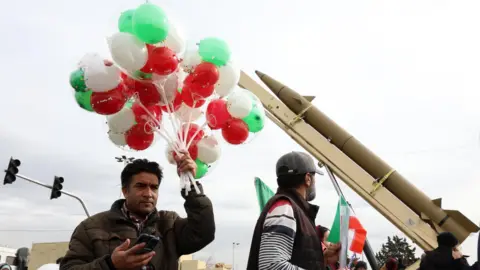
When clocks struck nine across Tehran on Tuesday, the night skies filled with sound in celebration of the 47th year of the Iranian revolution. Chants of 'God is greatest' rose from rooftops, and fireworks exploded in a colorful display. However, amid the celebration, a discordant note was struck, with voices calling 'death to the dictator' echoing in the darkness.
These chants marked a powerful reminder of the protests that swept through the country last month, which were met with extreme violence and significant loss of life. This year’s celebrations took place against a backdrop of civil unrest, with many Iranians expressing their frustrations over economic hardships amidst rising prices and calls for the end of clerical rule.
As crowds filled the streets for state-sponsored celebrations, the atmosphere contrasted sharply with the tensions surrounding the recent protests, which had resulted in mass casualties following government crackdowns.
Moreover, the Iranian President addressed the celebrations by condemning foreign influence while acknowledging the legitimacy of protesters’ concerns about the economy. 'We are ready to listen to the voice of the people,' he emphasized, reflecting the complex interplay between state authority and public dissent.
Such dynamics indicate that the Islamic Republic is currently facing its most consequential challenges since the inception of the revolution nearly half a century ago, as it grapples with both internal discontent and international pressures.
These chants marked a powerful reminder of the protests that swept through the country last month, which were met with extreme violence and significant loss of life. This year’s celebrations took place against a backdrop of civil unrest, with many Iranians expressing their frustrations over economic hardships amidst rising prices and calls for the end of clerical rule.
As crowds filled the streets for state-sponsored celebrations, the atmosphere contrasted sharply with the tensions surrounding the recent protests, which had resulted in mass casualties following government crackdowns.
Moreover, the Iranian President addressed the celebrations by condemning foreign influence while acknowledging the legitimacy of protesters’ concerns about the economy. 'We are ready to listen to the voice of the people,' he emphasized, reflecting the complex interplay between state authority and public dissent.
Such dynamics indicate that the Islamic Republic is currently facing its most consequential challenges since the inception of the revolution nearly half a century ago, as it grapples with both internal discontent and international pressures.