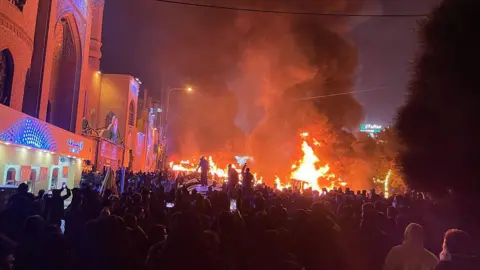
As the streets of Tehran erupt with protests driven by economic despair and calls for regime change, the question of US intervention looms large. Mojdeh, an Iranian-American, recounts her unexpected entrapment in the midst of civil unrest during a recent family visit, illustrating the tangible fear and chaos experienced as protests led to violent crackdowns. The debate over foreign intervention is deeply personal, as families divided by geography express a mixture of fear, hope, and skepticism.
National conversations present a divide: some advocate for US military involvement, believing it could help dismantle a regime they perceive as oppressive, while others stress the importance of internal solidarity and resistance. Activists like Roozbeh Farahanipour caution against outside interference, indicating that transformational change must originate within Iran itself.
The human cost of the protests is grave, with thousands reported dead amidst calls for freedom and dignity. Accurate figures remain elusive due to government-imposed internet blackouts and restricted reporting. Amidst this, Iran Human Rights and other organizations report massive arrests, echoing the urgency of intervention.
For those like Shirin, who fear for the well-being of loved ones back home, the pain of witnessing the conflict from afar is overwhelming. It's not only about our family - it's 90 million people we're worried about, she expresses, capturing the collective anguish of the Iranian diaspora.
The struggle continues as Iranians grapple with the implications of potential external support, while voices both hopeful and wary navigate a landscape fraught with danger and uncertainty.
National conversations present a divide: some advocate for US military involvement, believing it could help dismantle a regime they perceive as oppressive, while others stress the importance of internal solidarity and resistance. Activists like Roozbeh Farahanipour caution against outside interference, indicating that transformational change must originate within Iran itself.
The human cost of the protests is grave, with thousands reported dead amidst calls for freedom and dignity. Accurate figures remain elusive due to government-imposed internet blackouts and restricted reporting. Amidst this, Iran Human Rights and other organizations report massive arrests, echoing the urgency of intervention.
For those like Shirin, who fear for the well-being of loved ones back home, the pain of witnessing the conflict from afar is overwhelming. It's not only about our family - it's 90 million people we're worried about, she expresses, capturing the collective anguish of the Iranian diaspora.
The struggle continues as Iranians grapple with the implications of potential external support, while voices both hopeful and wary navigate a landscape fraught with danger and uncertainty.