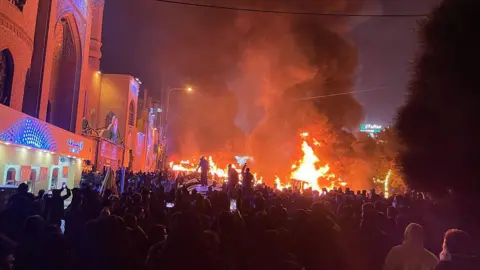
The question of US intervention in Iran elicits strong emotions and divided views among Iranians, both inside and outside the country. The escalating protests, sparked by economic despair and government repression, have driven many to consider the implications of US military involvement.
For individuals like Mojdeh, who traveled to Tehran expecting a simple family visit only to find themselves trapped in turmoil, the reality of unrest has been stark. She recalled the abrupt shift from ordinary life to chaotic protests, noting the eerie quiet when communication networks went dark.
The Bloomberg-focused protests began just before the new year, with calls to depose the Islamic Republic fueled by frustrations over economic crises. As security forces responded with lethal force, the death toll remains murky, varying widely based on different reporting agencies.
While some Iranians express hope for international intervention as a means to end systemic violence, others fear the repercussions such actions might bring to their loved ones still living under the regime. Activists like Roozbeh Farahanipour emphasize that true change must rise from within Iran rather than be imposed from abroad.
Contrastingly, individuals like Ali argue that outside pressure is necessary to challenge an unyielding regime that has survived previous uprisings. He advocates for targeted strikes rather than outright military invasion as a way to support internal reform efforts.
The absence of a clear consensus on interventions reflects deep fears shaped by recent history, along with a swirling despair concerning the safety and futures of millions in Iran. Amidst this turmoil, Iranian-Americans like Shirin voice their distress, advocating for action to safeguard their nation—a sentiment complicated by the weight of grief and hope for a better future.
For individuals like Mojdeh, who traveled to Tehran expecting a simple family visit only to find themselves trapped in turmoil, the reality of unrest has been stark. She recalled the abrupt shift from ordinary life to chaotic protests, noting the eerie quiet when communication networks went dark.
The Bloomberg-focused protests began just before the new year, with calls to depose the Islamic Republic fueled by frustrations over economic crises. As security forces responded with lethal force, the death toll remains murky, varying widely based on different reporting agencies.
While some Iranians express hope for international intervention as a means to end systemic violence, others fear the repercussions such actions might bring to their loved ones still living under the regime. Activists like Roozbeh Farahanipour emphasize that true change must rise from within Iran rather than be imposed from abroad.
Contrastingly, individuals like Ali argue that outside pressure is necessary to challenge an unyielding regime that has survived previous uprisings. He advocates for targeted strikes rather than outright military invasion as a way to support internal reform efforts.
The absence of a clear consensus on interventions reflects deep fears shaped by recent history, along with a swirling despair concerning the safety and futures of millions in Iran. Amidst this turmoil, Iranian-Americans like Shirin voice their distress, advocating for action to safeguard their nation—a sentiment complicated by the weight of grief and hope for a better future.