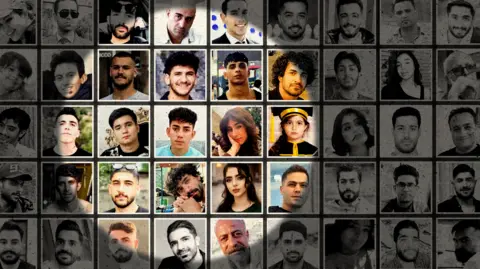
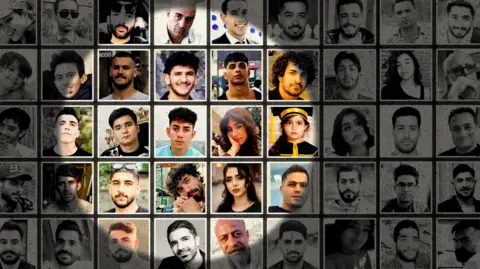
BBC News Persian has verified the identities of more than 200 of the thousands of people killed during Iran's brutal crackdown on the recent widespread protests.
The project has scoured social media, verified online footage and used eyewitness accounts to build up a chronicle of how and when the protesters were killed, as well as some details about their lives.
Many of these accounts were provided to the BBC by sources close to the victims and were cross-checked against data from human rights organisations.
Since the unrest began in late December, the US-based Human Rights Activists News Agency (HRANA) has confirmed the deaths of 6,872 protesters, including more than 150 children.
Iranian authorities acknowledge that at least 3,000 people were killed, but claim some were members of the security forces.
Among those killed were Mansoureh Heydari and her husband, Behrouz Mansouri. A family friend told BBC News Persian that the couple had joined the protests in Bushehr, in south-west Iran, when both were shot dead by security forces on 8 January.
The couple died side by side in the street, leaving behind two children aged eight and 10. Their bodies were returned by security forces four days later and they were buried next to each other.
Many of the faces featured in the project are young men and women, mostly in their late teens to early 30s. One 17-year-old art student, Ghazal Damarcheli, was shot outside her family home in the city of Karaj, west of Tehran, on 9 January.
Despite her father's pleas for her to stay at home, she joined protesters on the streets of Tonekabon, where security forces opened fire on the crowd, hitting her. She fell into her father's arms, telling him as she lay dying: Dad, I'm burning. The family faced pressure as security forces refused to allow them to bury her nearby.
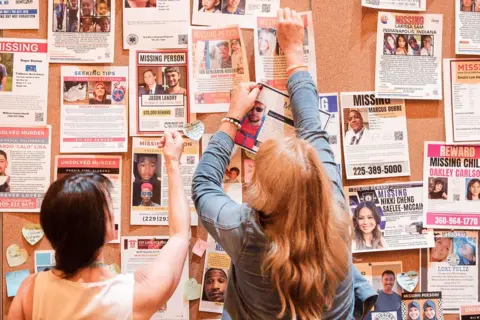
The work has become especially difficult during the protests, particularly when internet access was cut off. Nevertheless, the BBC's Visual Journalism team continues to verify identities and document the tragic stories of these victims, creating an interactive face wall on their website.
The project aims to continue adding names and stories as further verification is sought, ensuring that these voices are not silenced.