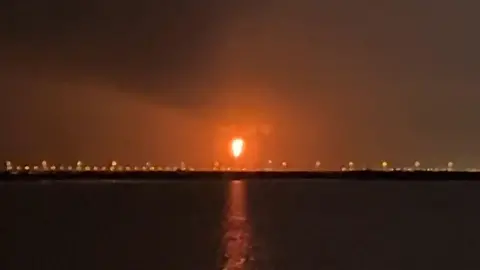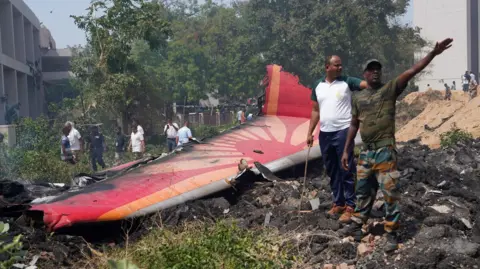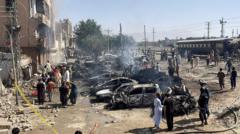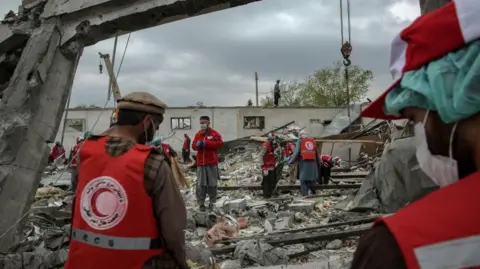
Rescue teams are continuing to pull bodies from the smoking rubble of a drug rehabilitation centre in the Afghan capital, Kabul, which was hit on Monday night in a devastating Pakistani air strike.
The attack on the Omid Addiction Treatment Hospital, which happened at about 21:00 local time (16:30 GMT), is the deadliest in recent violence between Pakistan and Afghanistan.
The strike occurred while residents were breaking their daily fast for the Muslim holy month of Ramadan.
The death toll has continued to rise, and the Taliban government says it believes around 400 people were killed, although this figure has yet to be confirmed. Many others were injured.
Mohammad Shafee, a patient in his 20s, survived the attack. I was in the kitchen helping to serve dinner when I heard a loud bang and ran for safety, he told the BBC. When I returned later, I found most of our colleagues and people in the dining room hit. Only five of us survived.
Maiwand Hoshmand, a doctor at the facility, explained that patients had just finished dinner and some were engaged in congregational prayer when jets struck three parts of the centre.
According to witnesses, military units surrounding the area engaged a jet, which then dropped bombs on the rehabilitation center, leading to widespread destruction. Ahmad, a 50-year-old patient, recounted, The whole place caught fire. It was like doomsday. My friends were burning in the fire, and we could not save them all.
The necessity of this military action is still under scrutiny, with Pakistan denying any deliberate targeting of the facility. They assert that they aimed at precise military installations.
Medics have been seen attending to dozens of injured individuals in the remnants of the single-story building. A large crowd gathered at the site, anxiously waiting for updates on loved ones admitted to the facility.
The distress among families was palpable, with one woman searching for her husband, who had been undergoing treatment for seven months, expressing her despair over the lack of information.
While at least 100 bodies have been retrieved, the true extent of casualties remains unclear due to the condition of many of the deceased. Reports indicate that at least six health facilities in Afghanistan have been impacted by the recent resurgence of violence since late February.
Afghanistan, a leading source of opium, is facing a considerable drug addiction crisis. The Omid facility had previously been a military training compound before being repurposed, housing an overwhelming number of patients reforming under Taliban governance.