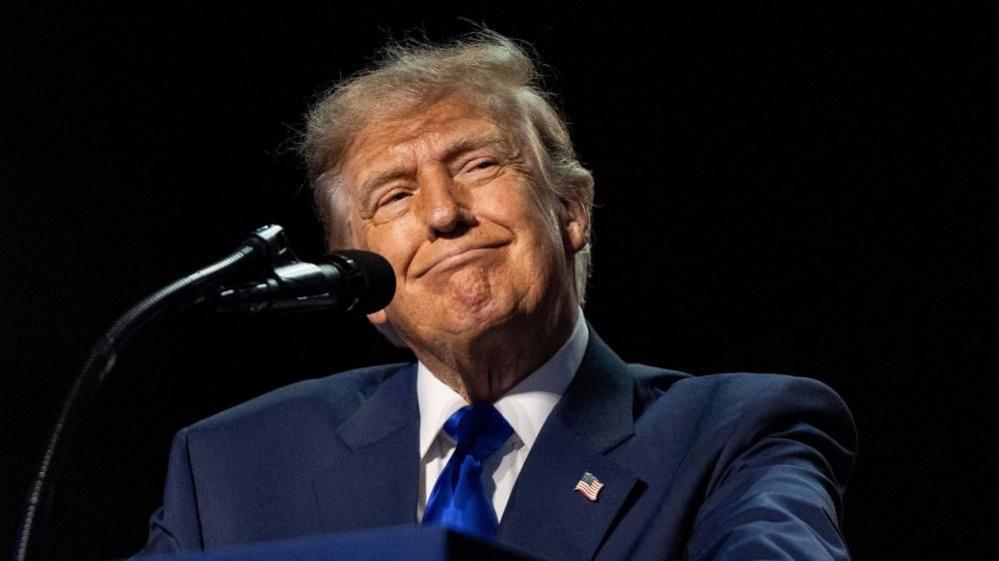
The U.S. Senate has agreed to advance a stalled immigration spending bill after Republican lawmakers removed a $1 billion allocation intended to fund security upgrades for President Donald Trump’s new White House ballroom. The removal came amid criticism that the funds could be used to boost a Trump‑pushed $750 million ballroom on the former East Wing site to accommodate high‑profile state functions.
Under the original budget, the $1 billion would have covered advanced security systems approved following a January shooting at a gala Trump attended. Trump maintains that the project is essential for hosting state events and that private donations will fund the bulk of the cost.
The immigration bill, which now contains roughly $72 billion for agencies such as Immigration and Customs Enforcement (ICE) and the Border Patrol, was adopted in a 53‑45 vote after the Senate’s rule‑keeper agreed to lift a prior hold. Senators will now debate the measure and offer amendments before final approval, a process that could spill into Thursday.
If passed, the bill will go to the House of Representatives and, upon its completion, to President Trump for signature. Critics note that cutting the ballroom funding is a setback for Trump’s agenda, though the impact on the construction project remains unclear.
During the same session, Republicans opposed the Department of Justice’s plan to establish an "anti‑weaponisation" fund worth $1.8 billion to compensate individuals allegedly harmed by government overreach. The fund was subsequently cancelled after Acting Attorney General Todd Blanche testified that the Justice Department was dropping the initiative. Trump, however, indicated the plan was not entirely dead and could still be revived through legal channels.
Republican Senator Thom Tillis of North Carolina announced he would introduce legislation to ban the creation of such a fund, and other Republicans have criticized the proposal while Democrats say they plan to counteract it through new laws.
In summary, the Senate’s approval of the immigration budget and the removal of the $1 billion for the ballroom reflect a broader clash over presidential projects and federal spending—underscoring the political friction that continues to shape the U.S. government’s policy direction.