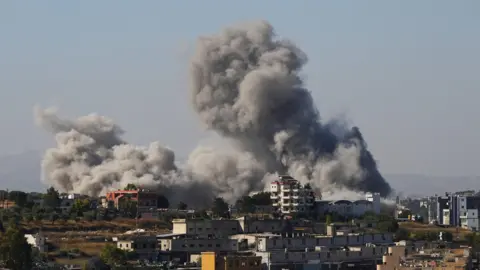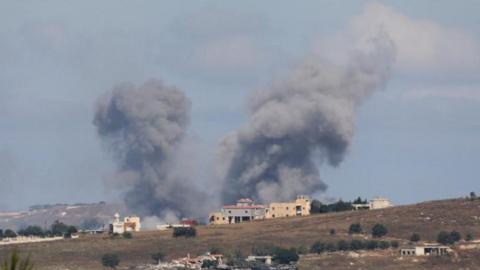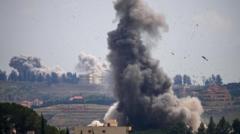
Israel has carried out air strikes in southern Lebanon on Tuesday, but refrained from attacking the capital of Beirut. The move comes amid a partial ceasefire agreed by the United States, the Iranian‑backed Hezbollah and Israel. Under the arrangement, Israel promised not to target Beirut while Hezbollah would hold back from launching further attacks against Israeli territory.
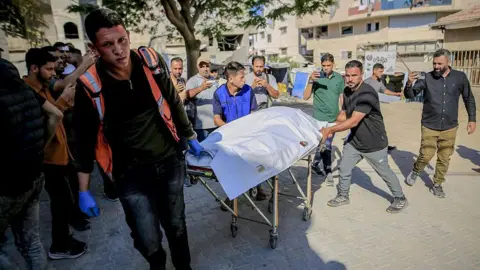
On Tuesday, Israeli jets hit the eastern suburbs of Jabateh and struck buildings near the Jabal‑Amel hospital in Tyre. Four people were killed and 127 wounded, 39 of the injured were hospital staff, the Lebanese health ministry announced. The hospital corridors were shaken by the blast, with shattered glass and collapsed ceilings. A newborn infant, Fares, had been brought to the maternity ward moments before the strike, while the hospital director, Dr Wael Mroueh, told reporters the attack came “without any warning.”
Israel said the strike hit “Hezbollah terrorist infrastructure” and claimed it was not aimed at the hospital. The military also accused Hezbollah of embedding itself within civilian areas. In contrast, the Lebanese Ministry of Health noted that 128 paramedics and healthcare workers had been killed in the past three months by 159 attacks on ambulances and facilities.
The ceasefire was brokered after a series of diplomatic exchanges. President Donald Trump notified the U.S. ambassador in Lebanon that he had secured Israeli Prime Minister Benjamin Netanyahu’s agreement to a pause in Beirut operations. Netanyahu later confirmed that if Hezbollah continued to fire at Israeli towns, Israeli forces would target “terrorist targets” in Beirut.
Hezbollah’s fighter wing denied cross‑border assaults on Israeli ships but reported using drones, missiles and shells against Israeli forces in the towns of Haddatha, Bayada and Zawtar al‑Sharqiya. Hassan Fadlallah, a senior Hezbollah lawmaker, said the group would not endorse a one‑sided ceasefire and called for a full withdrawal of Israeli troops from southern Lebanon.
Meanwhile, diplomatic negotiations in Washington are set to continue through Wednesday, with Israeli and Lebanese diplomats expected to further refine the terms of the paused hostilities.
Israel’s conflict has already claimed 3,468 lives in Lebanon, with more than a million people displaced according to UN figures. The war has also had international ramifications – U.S. officials warning that the ceasefire would influence broader talks between Israel, the United States and Iran.
In the wake of the ceasefire, Israeli forces announced a fresh evacuation order for Nabatieh town, citing Hezbollah’s alleged “violation of the ceasefire agreement.” The Lebanese civil defence agency reported another strike in Kfar Sir, causing damage but no casualties.
With the ceasefire in effect for the first time in months, the situation remains fluid. The window for a comprehensive truce is now open, but any breach of the agreement by either party could trigger a rapid escalation.