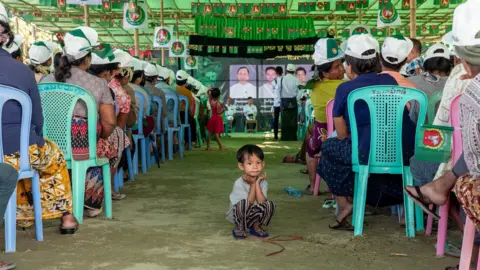
On a patch of rough ground near the Irrawaddy River, aspiring member of parliament and retired Lieutenant-General Tayza Kyaw tries to muster some enthusiasm from his audience with a speech promising them better times. He is the candidate for the Union Solidarity and Development Party (USDP), backed by Myanmar's military, in Aungmyaythazan, a constituency in the city of Mandalay.
The crowd of 300-400 clutch the branded hats and flags they've been given, but soon wilt in the afternoon heat, some dozing off. Children run and play in between the rows of chairs. Many of these families are victims of the earthquake that badly damaged Mandalay and surrounding areas in March, and are hoping for a handout. They disappear the moment the rally finishes.
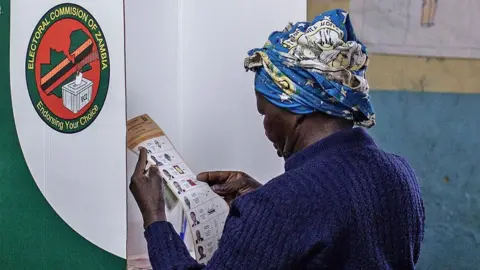
On Sunday, the people of Myanmar get their first opportunity to vote in an election since the military seized power in a coup nearly five years ago, setting off a devastating civil war. However, the poll, already delayed many times by the ruling junta, is being widely condemned as a sham. The most popular party, the National League for Democracy, has been dissolved, and its leader, Aung San Suu Kyi, is locked up in an undisclosed prison.
Voting, which will happen in three stages over a period of a month, will not even be possible in large parts of the country still consumed by war. Even where voting is taking place, it is marred by a climate of fear and intimidation.
The military's increasingly oppressive tactics have exacerbated fears among citizens about the election process. Various laws criminalizing dissent mean that voicing opposition can lead to severe personal consequences. Many Burmese are resigned to casting their votes under duress, with sentiments of apathy and fear dominating their perspectives on the supposed democratic exercise. “We will vote but not with our hearts,” said one woman, embodying the skepticism pervasive among voters in the run-up to this contentious ballot.
The junta, led by General Min Aung Hlaing, appears confident that this election can provide a veneer of legitimacy to their rule, despite the fact that vast swathes of the country will be inaccessible due to ongoing armed conflict. As they bolster their military capabilities with support from foreign powers, they seem poised to maintain control at any cost, leaving the prospect of genuine democracy in Myanmar as a haunting specter of what could have been.
The crowd of 300-400 clutch the branded hats and flags they've been given, but soon wilt in the afternoon heat, some dozing off. Children run and play in between the rows of chairs. Many of these families are victims of the earthquake that badly damaged Mandalay and surrounding areas in March, and are hoping for a handout. They disappear the moment the rally finishes.
On Sunday, the people of Myanmar get their first opportunity to vote in an election since the military seized power in a coup nearly five years ago, setting off a devastating civil war. However, the poll, already delayed many times by the ruling junta, is being widely condemned as a sham. The most popular party, the National League for Democracy, has been dissolved, and its leader, Aung San Suu Kyi, is locked up in an undisclosed prison.
Voting, which will happen in three stages over a period of a month, will not even be possible in large parts of the country still consumed by war. Even where voting is taking place, it is marred by a climate of fear and intimidation.
The military's increasingly oppressive tactics have exacerbated fears among citizens about the election process. Various laws criminalizing dissent mean that voicing opposition can lead to severe personal consequences. Many Burmese are resigned to casting their votes under duress, with sentiments of apathy and fear dominating their perspectives on the supposed democratic exercise. “We will vote but not with our hearts,” said one woman, embodying the skepticism pervasive among voters in the run-up to this contentious ballot.
The junta, led by General Min Aung Hlaing, appears confident that this election can provide a veneer of legitimacy to their rule, despite the fact that vast swathes of the country will be inaccessible due to ongoing armed conflict. As they bolster their military capabilities with support from foreign powers, they seem poised to maintain control at any cost, leaving the prospect of genuine democracy in Myanmar as a haunting specter of what could have been.