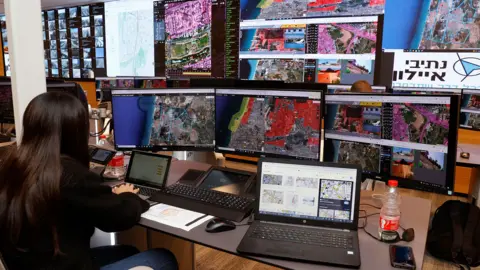
In recent weeks, as tensions rise and military actions intensify across Iran and the surrounding Gulf regions, air traffic controllers face the daunting task of managing the safety of passenger aircraft navigating congested airspace. The increase of flight activity in safer regions like Egypt and Georgia has become evident, as controllers coordinate more aircraft than usual while also maintaining a keen focus on security.
On a typical day, each controller might handle six aircraft at once, but during heightened conflict, that number can double. Retired air traffic controller Brian Roche notes that concentration levels peak at 20-30 minutes before controllers must rotate to avoid overexertion. Ensuring safety during such periods requires an intricate balance of communication and strategic planning.
Controllers keep a vigilant eye on flight paths, ensuring that all aircraft are properly distanced from each other to prevent turbulence-related issues, often reshuffling them to new routes when airspace becomes congested or closed. For pilots like John, who have spent over two decades in the cockpit, these adjustments are well-planned and rehearsed, ensuring that their flying remains orderly even amidst chaos.
Recent air incidents such as the tragic downing of Malaysia Airlines MH17 underscore the critical nature of avoiding conflict zones. As airlines navigate disruptions, many have increased layovers and adjusted flight plans to circumvent high-risk airspace. This careful planning aids pilots in carrying ample fuel against potential diversions and time delays, emphasizing a proactive approach to safety management.
In the cabin, flight crew members like Hannah provide a calming presence for anxious passengers, showcasing the dual role of flight attendants as safety professionals. With operational pressures mounting during conflicts, the dedication of both flight crews and air traffic personnel ranges beyond serving meals to prioritizing safety and staying reconnect through the aerial network.
As the aviation industry continues to adapt under the shadow of armed conflict, the resilience and collaboration of air traffic controllers and pilots play a crucial role in maintaining global connectivity.
On a typical day, each controller might handle six aircraft at once, but during heightened conflict, that number can double. Retired air traffic controller Brian Roche notes that concentration levels peak at 20-30 minutes before controllers must rotate to avoid overexertion. Ensuring safety during such periods requires an intricate balance of communication and strategic planning.
Controllers keep a vigilant eye on flight paths, ensuring that all aircraft are properly distanced from each other to prevent turbulence-related issues, often reshuffling them to new routes when airspace becomes congested or closed. For pilots like John, who have spent over two decades in the cockpit, these adjustments are well-planned and rehearsed, ensuring that their flying remains orderly even amidst chaos.
Recent air incidents such as the tragic downing of Malaysia Airlines MH17 underscore the critical nature of avoiding conflict zones. As airlines navigate disruptions, many have increased layovers and adjusted flight plans to circumvent high-risk airspace. This careful planning aids pilots in carrying ample fuel against potential diversions and time delays, emphasizing a proactive approach to safety management.
In the cabin, flight crew members like Hannah provide a calming presence for anxious passengers, showcasing the dual role of flight attendants as safety professionals. With operational pressures mounting during conflicts, the dedication of both flight crews and air traffic personnel ranges beyond serving meals to prioritizing safety and staying reconnect through the aerial network.
As the aviation industry continues to adapt under the shadow of armed conflict, the resilience and collaboration of air traffic controllers and pilots play a crucial role in maintaining global connectivity.