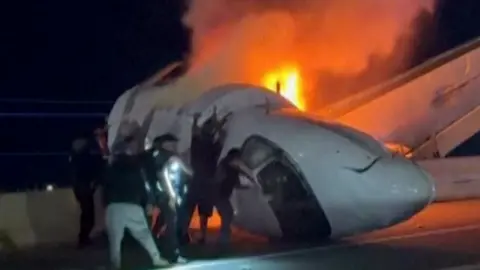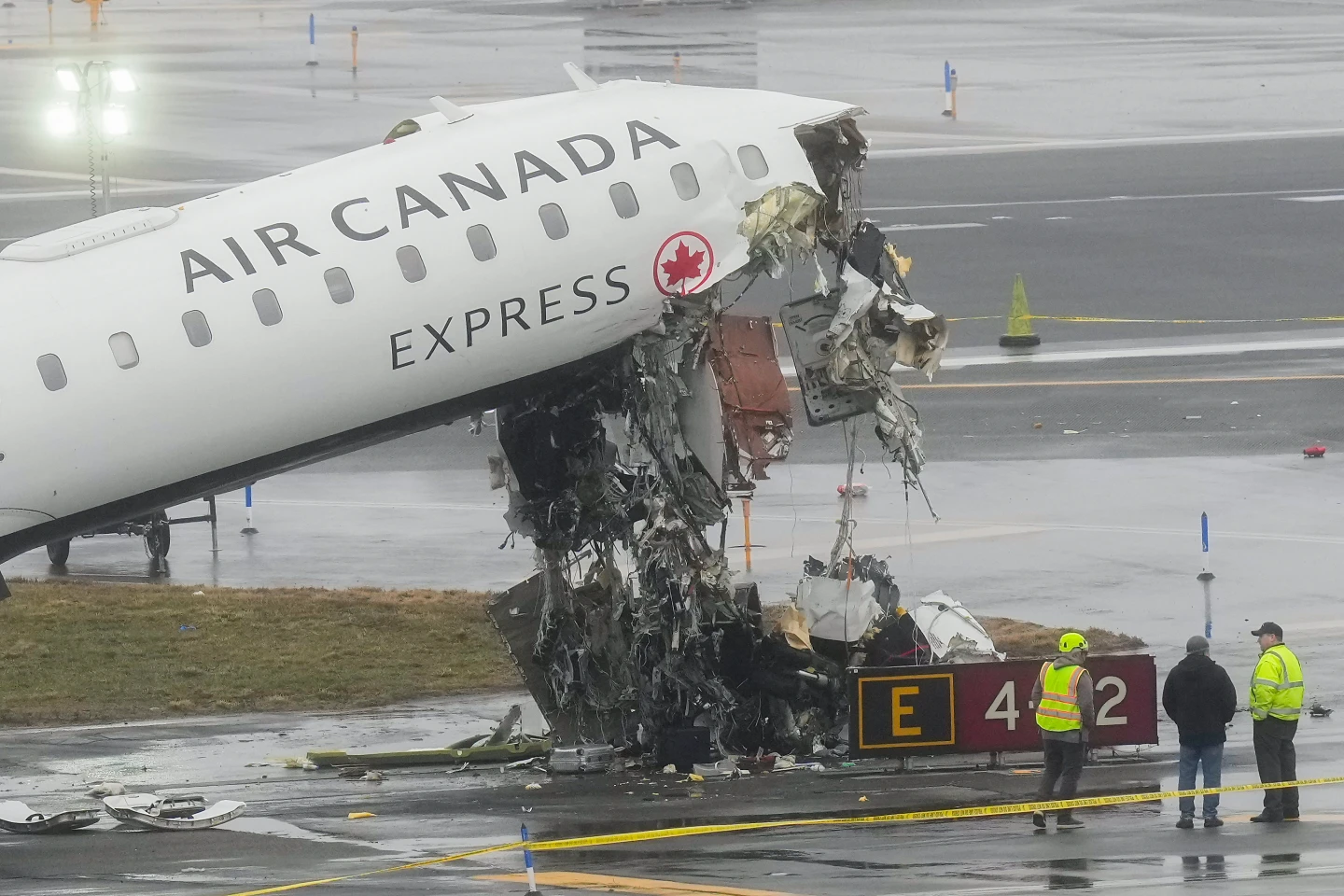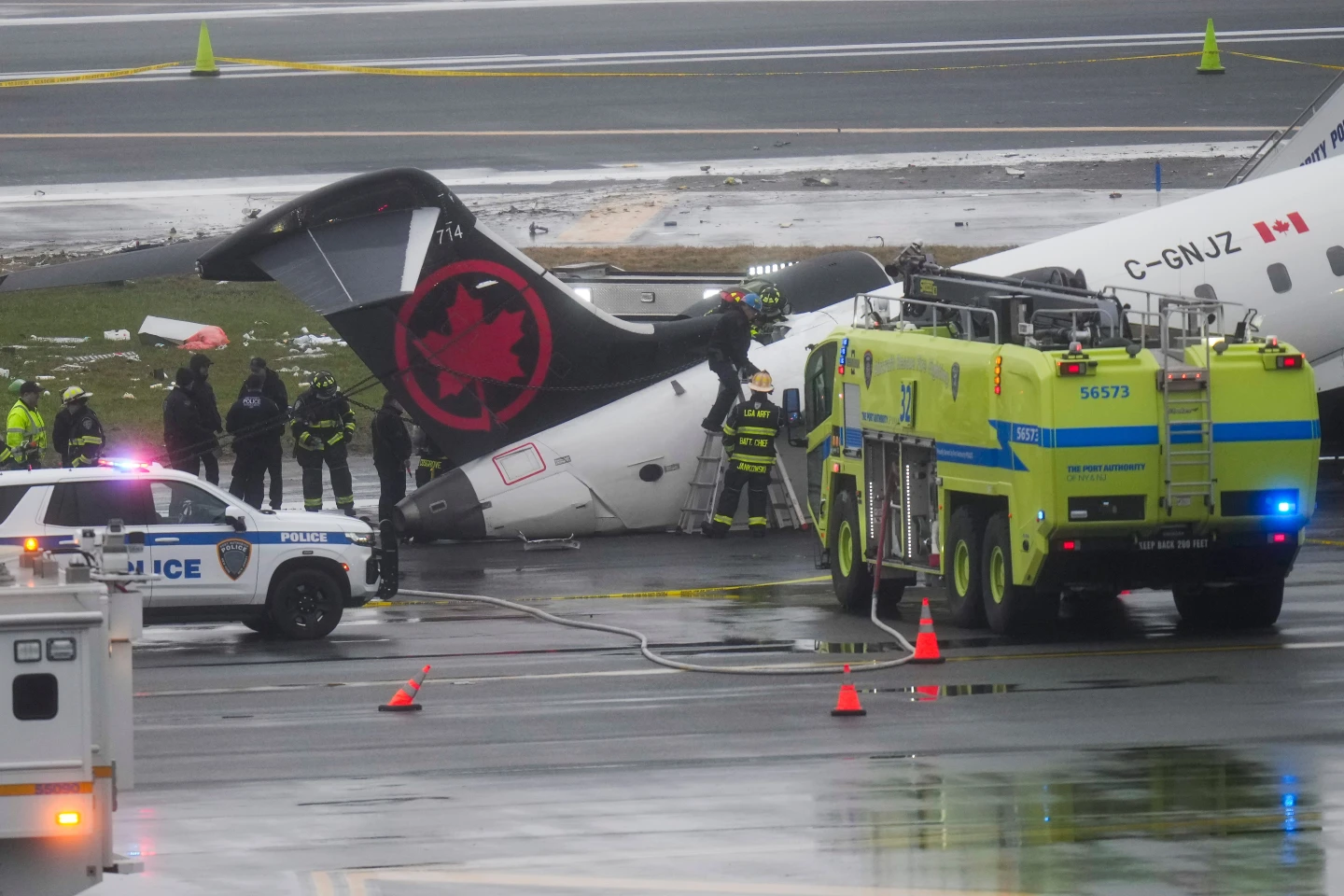
Federal investigators detailed a series of issues and failures that resulted in last month’s deadly collision between a regional jet and a fire truck at New York’s LaGuardia Airport. According to a preliminary report from the National Transportation Safety Board (NTSB), the fire truck drove through a stop light and was not equipped with a transponder, which hindered collision warning systems.
The crash occurred when Air Canada Express Flight 8646 from Montreal, carrying 76 passengers and crew, collided with the fire truck moments after landing on March 22, resulting in the deaths of pilots Antoine Forest and Mackenzie Gunther, and injuries to 39 others.
This incident represents LaGuardia's first deadly crash in 34 years. The NTSB's report outlines several contributing factors:
Busy Air Traffic Controllers
On the night of the crash, LaGuardia's air traffic controllers were overwhelmed, handling more than twice the evening's scheduled arrivals and departures due to delays.
Missing Transponder on Fire Truck
The fire truck, part of a convoy responding to another incident at the runway, lacked a transponder that would have integrated its movements into the airport's Advanced Surface Detection System (ASDE-X).
Active Warning Lights
Air traffic control cleared the fire truck to cross the runway while red lights indicating it was unsafe to do so were still active, with the controller realizing the impending collision just seconds before it occurred.
Ambiguous Communication
The air traffic controller’s order to stop went unheeded until it was too late, partially due to the chaotic communication regarding multiple vehicles present in the area.
The findings of the NTSB bear serious implications for safety protocols at airports and could prompt major changes to procedures in ground vehicle management and air traffic control oversight.