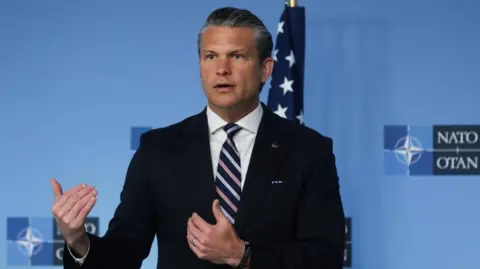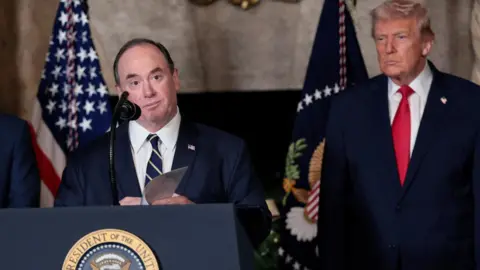
US Navy Secretary John Phelan is leaving the Trump administration, the Pentagon announced on Wednesday.
The announcement of Phelan's resignation states it will be effective immediately. Pentagon spokesman Sean Parnell noted that Navy Undersecretary Hung Cao will serve as acting Secretary.
Phelan's exit is the latest in a series of high-profile departures from the military leadership under the Trump administration, coinciding with ongoing hostilities involving the US and Iran amidst the backdrop of the US-Israel conflict and a military blockade of the Strait of Hormuz.
Although the Navy has not publicly disclosed the reasons for Phelan's departure, reports suggest it stems from conflicts regarding new shipbuilding rights and initiatives.
Parnell expressed gratitude for Phelan's service, stating, On behalf of the Secretary of War and the Deputy Secretary of War, we wish him well in his future endeavors. This change follows the recent resignation of Army Chief of Staff Randy George at the request of Defense Secretary Pete Hegseth.
Recent shifts in command have also led to the removal of multiple Army leaders, reflecting broader tumult within military ranks. Hegseth has taken decisive action since assuming his position, terminating over a dozen senior officers.
Phelan's departure appears tied to his clashes with Hegseth over shipbuilding policies, notably the Trump-supported ship-lifting initiatives.
On December 22, 2025, Phelan was in attendance with former President Trump at Mar-a-Lago when the new Golden Fleet initiative was announced. Under Cao's interim supervision, the Navy will continue adapting to its evolving challenges and U.S. military strategy.
Cao’s experience includes 25 years in the Navy, which he navigated following an unsuccessful Senate campaign in 2024.
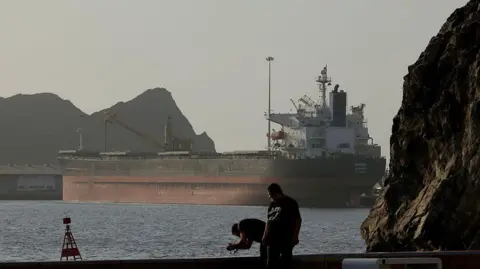
The reshuffling occurs as the U.S. maintains a blockade on Iranian ports despite a ceasefire discussion, with tensions affecting vital shipping routes in the region, leading to continued clashes and an increase in military activity. White House responses indicate satisfaction with current military engagements despite escalating geopolitical concerns.