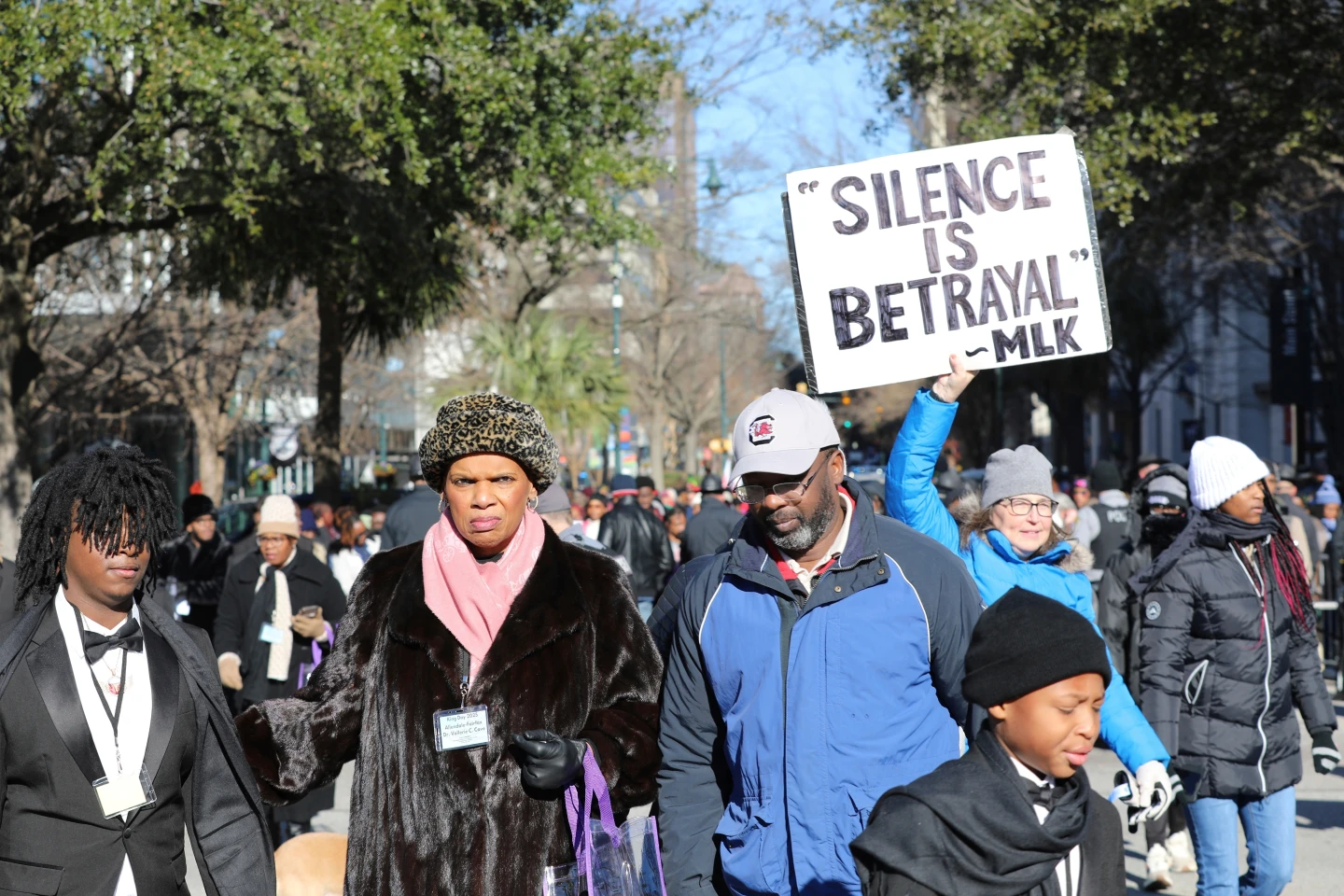
As communities across the United States reflect on the legacy of Martin Luther King Jr. during the 40th federal observation of MLK Day, the atmosphere is charged with tension rather than festivity. The political landscape has shifted in recent years, with many expressing concern over efforts that seem to roll back civil rights achievements.
In the year since Donald Trump’s remarks during a previous MLK Day, his administration has faced criticism for its hardline stance on diversity and civil rights initiatives. His assertion that movements aimed at uplifting marginalized groups constitute discrimination against white people continues to stir debate, with many civil rights advocates arguing that such rhetoric threatens the progress made by King and others.
As parades and service projects are planned throughout the country, conservative voices suggest the focus should remain solely on King’s teachings, emphasizing a ‘colorblind’ society. However, advocacy groups like the NAACP and the Movement for Black Lives assert that this year's observance demands a different tone—one centered on resistance and advocacy for the rights of marginalized communities amidst rising fears of state violence and systemic racism.
In particular, the recent fatal shooting of an unarmed woman by federal agents in Minneapolis has reignited fears among immigrant communities and advocates, underscoring the ongoing challenges faced in the pursuit of justice. Many King Day events this year are marked by protests and discussions aimed at reclaiming his legacy, advocating for a more equitable society.
In contrast, some institutions, like the National Civil Rights Museum in Memphis, continue their traditional celebrations that honor King’s contributions and the ongoing fight for civil rights. Meanwhile, events like Indiana University’s decision to cancel its long-standing MLK Day dinner highlight the challenges organizations face amid budget constraints and broader political pressures.
Despite the differences in approach to this significant day, from educational forums to rallies, it remains evident that King’s message continues to inspire action and reflection as the struggle for equality and justice persists.