A French-owned ship has passed through the Strait of Hormuz, more than a month after the US-Israeli war with Iran effectively closed the vital transport route.
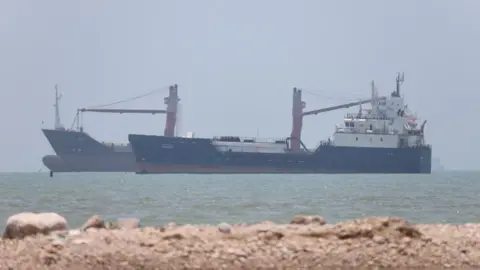
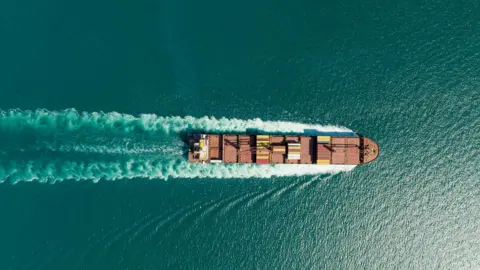
The Malta-flagged container ship owned by French company CMA CGM crossed the Strait, media organisation BFM TV - which is owned by the shipping company - confirmed on Friday. CMA CGM declined to comment.
It is the first ship owned by a major Western European firm to go through the strait since the conflict began, shipping analysts Kpler confirmed.
While Iran has said non-hostile vessels can use the waterway, the ongoing conflict - in which several ships have been attacked - has halted normal transport activity.
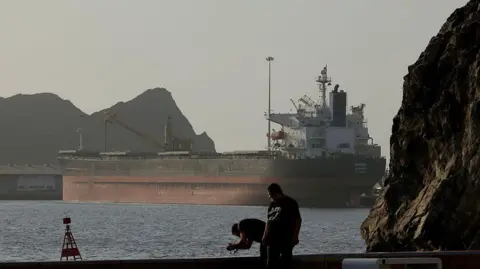
Tracking data showed the French-owned ship passed close to the coast of Oman on the opposite side of the waterway to Iran. It's not known what the ship was carrying.
A Japanese oil tanker also followed the same route out of the Strait of Hormuz.
Several ships that made the journey through the strait on Thursday hugged unusually close to the coast of Oman, according to maritime news and intelligence service Lloyd's List.
US President Donald Trump has stated that America could reopen the strait.
With a little more time, we can easily OPEN THE HORMUZ STRAIT, TAKE THE OIL, & MAKE A FORTUNE, he wrote on Truth Social. IT WOULD BE A GUSHER FOR THE WORLD???
About a fifth of the world's oil and liquid natural gas is transported through the Strait of Hormuz from the Gulf countries.
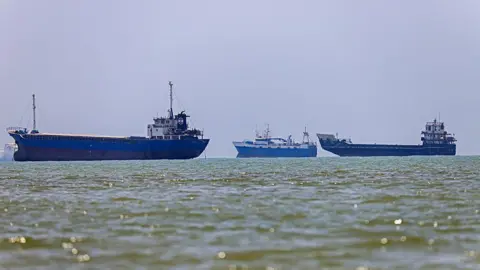
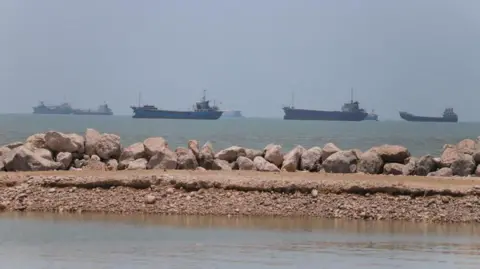
However, when the conflict began in late February, shipping was suspended, leaving about 200 vessels stranded in the surrounding waters according to Lloyd's List.
The dramatic slowdown in traffic through the strait has led to skyrocketing global oil prices, contributing to rising fuel costs and fears of higher inflation worldwide.
While traffic is down about 95% compared to before the conflict, shipping through the narrow waterway has not stopped altogether.
About 100 vessels have been able to pass through the Strait of Hormuz, according to data analysed by BBC Verify in late March, about five to six ships a day, approximately a third of which had links to Iran, while others were connected to countries like Pakistan and India.