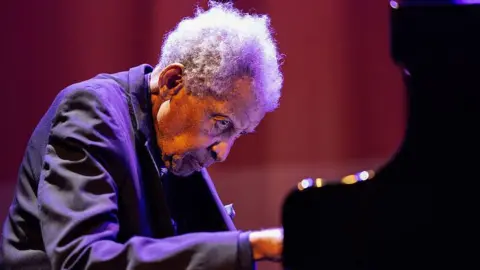
South African Jazz Legend Abdullah Ibrahim Dies at 91
South African composer and pianist Abdullah Ibrahim has died in Germany at the age of 91, his family announced, after a brief illness. Ibrahim, originally named Adolph Johannes Brand and better known early in his career as Dollar Brand, converted to Islam in the late 1960s and changed his name to Abdullah Ibrahim.
The Toronto‑born musician’s career spanned eight decades, producing dozens of recordings that echoed the politics and music of his homeland. His 1974 composition Mannenberg became a rallying cry for the anti‑apartheid struggle, blending traditional South African melodies with the improvisational DNA of jazz.
Ibrahim’s path started in Cape Town, where he began composing at the piano at just seven years old. As a teenager he played in a swing band, his own trio and later the seminal Jazz Epistles sextet, which also featured Hugh Masekela and others. The group was forced apart as apartheid tightened its grip on the nation, prompting Ibrahim to leave South Africa and settle in Switzerland.
American jazz great Duke Ellington later discovered Ibrahim and facilitated his move to the United States, where his unique sound—an amalgam of African vocal and harmonic traditions with African rhythmic innovation—rose to prominence. Despite his residence abroad, Ibrahim never cut ties with his roots, returning frequently to South Africa to record and perform.
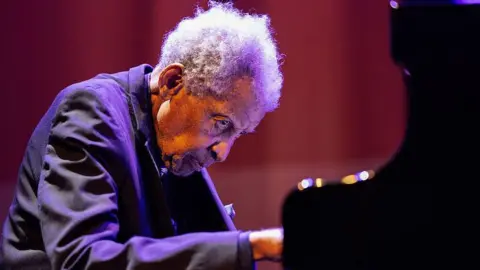
The pianist’s last public performance was at the Cape Town International Jazz Festival in March, where he “once again captivated audiences with the artistry, grace and profound musical vision that defined his life’s work” according to the family statement.
In a tribute, President Cyril Ramaphosa praised Ibrahim’s role in “honoring the South Africa that shaped his political commitment and musical brilliance.” Dr. Marina Umari, his partner, reflected that Abdullah “passed away peacefully with South Africa and its people in his heart. His love for his country never wavered, no matter where in the world he found himself.”
AFP via Getty Images
Producers of the piece can find additional context and interviews in BBC’s in‑depth coverage of Ibrahim’s life and work.