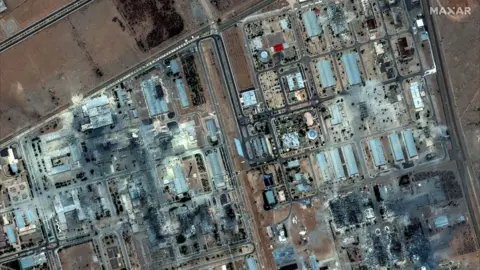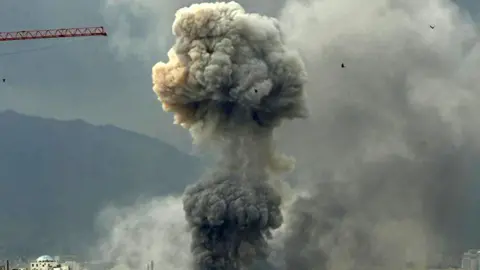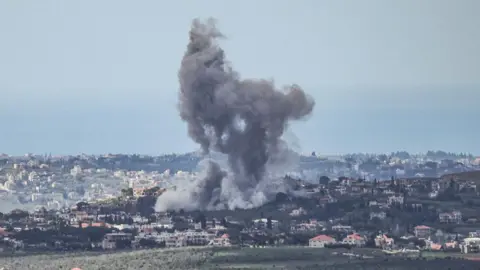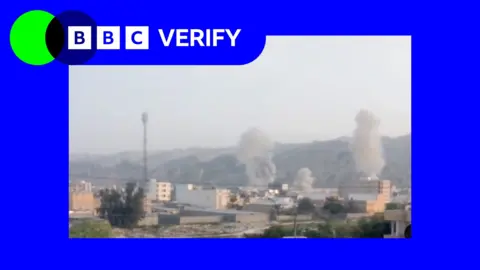
Multiple weapons experts have disputed a US claim that Iran may have been responsible for a deadly strike on the town of Lamerd on the first day of the war. Six experts, who examined footage of the strike and all commented independently, contested the US suggestion that it was an Iranian missile, citing the missile's visual features, the way it exploded, its trajectory, and the number of strikes in the area as the basis for their analysis.
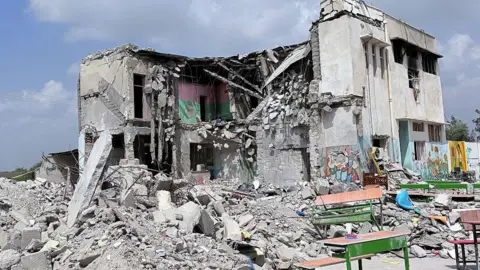
Iranian officials have reported that 21 individuals, including four children, lost their lives in the incident. BBC Verify originally reported on the strikes on March 28, suggesting a US Precision Strike Missile (PrSM) was likely used; however, US Central Command (Centcom) later denied this, asserting that the attack was consistent with an Iranian Hoveyzeh cruise missile.
Centcom remarked, US forces do not target civilians, unlike the Iranian regime which has attacked civilian locations in neighboring countries more than 300 times. In response to expert analysis after the initial report, Centcom stated it had nothing further to add.
Footage authenticated by BBC Verify revealed a munition exploding above a residential area. Experts collectively indicated that the missile appeared to possess characteristics indicative of a PrSM. One expert stated, I remain convinced that the weapon seen is a PrSM and not an Iranian Hoveyzeh Cruise Missile; the two are vastly different in appearance. This technical debate has led to a wider discussion regarding the accuracy and reliability of missile attributions in modern warfare.
Moreover, experts observed distinctive features relevant to the two types of missiles, including airburst capabilities associated with the PrSM, which were not recognized in the capabilities of the Hoveyzeh missile. The aftermath analysis indicated that the strike's damage pattern was consistent with that of an airburst munition, highlighting the complexity in conclusively attributing responsibility for such lethal strikes.