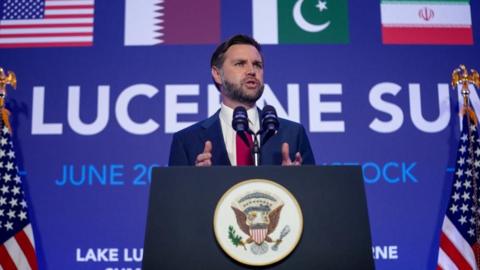
Donald Trump's recent address regarding the war with Iran highlighted a central contradiction: while he claimed that Iran's military capabilities were largely destroyed, he also threatened further escalations. This ambiguity reflects the underlying challenge faced by the US in achieving a decisive victory.
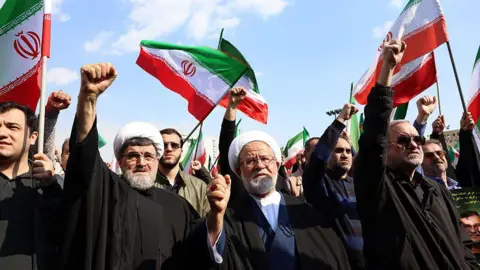
The Iranian regime is not experiencing a breakdown in its command structure. Leaders such as President Masoud Pezeshkian and others retain their positions and authority, with new replacements emerging who share a hardened ideological stance. Rather than a sign of regime change, this reflects a deep-rooted resilience in the face of external pressure and aggression.
Tehran's strategic goal is not to achieve victory in the conventional sense but to endure against superior military powers. For Iran, surviving the attack validates its long-term perspectives and influences regional dynamics considerably.
This resilience presents a dilemma for the US: disengaging would affirm Iran's endurance model, while continuing military involvement risks deeper entanglement with unclear outcomes. The leadership in Tehran continues to hold onto its demands for sovereignty and military deterrence while facing significant challenges economically.
As the war progresses, the question remains whether the US can reconcile claims of success with a persistent Iranian regime, which essentially remains unchanged despite the conflict. In this critical juncture, the implications of Iran's enduring position could reshape future geopolitical calculations in the region, underscoring the complexities involved in seeking a resolution.