Of all the warnings in President Trump's arsenal, quitting the NATO military alliance is among those he's wielded the most. Now he's doing it again.
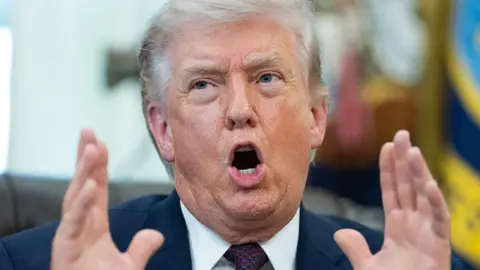
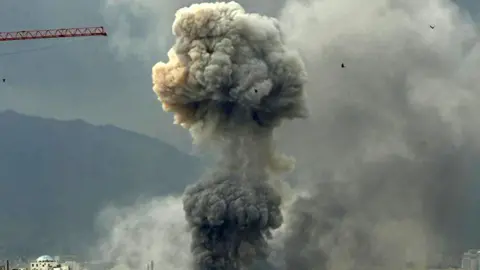
Asked by Britain's Telegraph newspaper if he is reconsidering U.S. membership of NATO, he said: 'Oh yes… I would say [it's] beyond reconsideration' – fuming again that his partners weren't joining America's military operations against Iran.
'I just think it should be automatic,' he emphasized in his remarks to the paper.
Trump's invective underscores his misunderstanding of how this 32-member alliance operates. NATO's Article 5 commits it to collective defense; however, invoking this principle requires consensus. The 1949 treaty specifically refers to crises in Europe and North America.
Following Trump's remark, an increasing number of allies have held back from joining conflicts they weren't consulted on, uncertain of NATO's goals amid mixed messages from the Trump administration. Article 5 has only been invoked once, post-9/11 in 2001.
Trump also referenced Ukraine, claiming, 'We've been there automatically, including Ukraine.' After Russia's full-scale invasion of Ukraine in 2022, the U.S. under President Joe Biden took a leading role in shaping the response from Western governments.
NATO provided assistance without becoming directly involved in the conflict. Even prior to Trump's presidencies, he frequently dismissed NATO as a 'paper tiger', criticized it as 'obsolete', and complained about its costs to the U.S.
This year, he mockingly suggested that without the U.S. as NATO's enforcer, Russia would have occupied all of Ukraine.
Trump nearly exited in early 2019, demonstrating a persistent pattern of threats. According to former NATO Secretary General Jens Stoltenberg, signs indicated Trump was prepared to act on his ultimatum, although the situation shifted unexpectedly after Trump praised NATO for increased member spending post his threats.
Military spending has surged across NATO countries, driven by Trump's pressures and the growing threat from Russia. The current U.S. military budget represents around 62% of NATO's total defense expenditure; the capabilities of the Pentagon remain unmatched.
Meanwhile, Trump’s Secretary of State Marco Rubio has stated that a review of NATO should be considered once the current conflict concludes. Despite these critiques, the U.S. Congress has recently passed a measure requiring the president to seek congressional approval to withdraw from NATO.
As Trump continues to make headlines, NATO leaders, including current Secretary General Mark Rutte, will have to work diligently to convince him of the value of U.S. involvement in the alliance, navigating between his unpredictable decisions and pressing global security needs.
Asked by Britain's Telegraph newspaper if he is reconsidering U.S. membership of NATO, he said: 'Oh yes… I would say [it's] beyond reconsideration' – fuming again that his partners weren't joining America's military operations against Iran.
'I just think it should be automatic,' he emphasized in his remarks to the paper.
Trump's invective underscores his misunderstanding of how this 32-member alliance operates. NATO's Article 5 commits it to collective defense; however, invoking this principle requires consensus. The 1949 treaty specifically refers to crises in Europe and North America.
Following Trump's remark, an increasing number of allies have held back from joining conflicts they weren't consulted on, uncertain of NATO's goals amid mixed messages from the Trump administration. Article 5 has only been invoked once, post-9/11 in 2001.
Trump also referenced Ukraine, claiming, 'We've been there automatically, including Ukraine.' After Russia's full-scale invasion of Ukraine in 2022, the U.S. under President Joe Biden took a leading role in shaping the response from Western governments.
NATO provided assistance without becoming directly involved in the conflict. Even prior to Trump's presidencies, he frequently dismissed NATO as a 'paper tiger', criticized it as 'obsolete', and complained about its costs to the U.S.
This year, he mockingly suggested that without the U.S. as NATO's enforcer, Russia would have occupied all of Ukraine.
Trump nearly exited in early 2019, demonstrating a persistent pattern of threats. According to former NATO Secretary General Jens Stoltenberg, signs indicated Trump was prepared to act on his ultimatum, although the situation shifted unexpectedly after Trump praised NATO for increased member spending post his threats.
Military spending has surged across NATO countries, driven by Trump's pressures and the growing threat from Russia. The current U.S. military budget represents around 62% of NATO's total defense expenditure; the capabilities of the Pentagon remain unmatched.
Meanwhile, Trump’s Secretary of State Marco Rubio has stated that a review of NATO should be considered once the current conflict concludes. Despite these critiques, the U.S. Congress has recently passed a measure requiring the president to seek congressional approval to withdraw from NATO.
As Trump continues to make headlines, NATO leaders, including current Secretary General Mark Rutte, will have to work diligently to convince him of the value of U.S. involvement in the alliance, navigating between his unpredictable decisions and pressing global security needs.