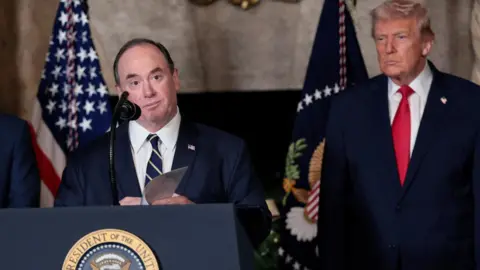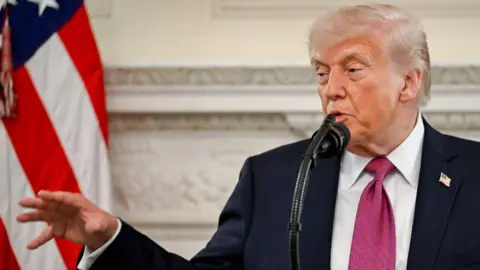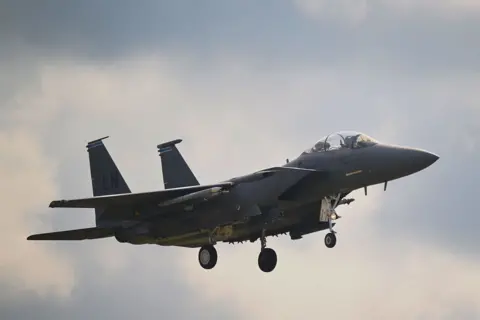
President Donald Trump had previously asserted Iran's inability to threaten American aircraft operating over its territory, claiming a significant degradation in its air defense capabilities. However, the downing of an F-15 Eagle suggests that Iran retains some capacity to defend its airspace, posing a strategic embarrassment for Washington.
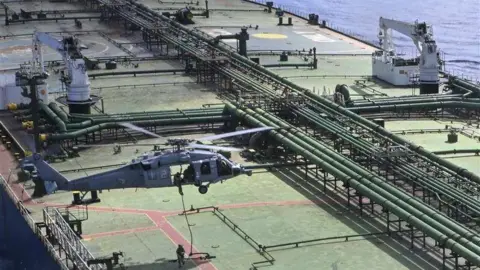
This incident marks a turning point in US-Iran relations, particularly with one crew member still missing, raising concerns about who might capture or rescue him and the implications for US national security.
The situation escalated further as Tehran's Islamic Revolutionary Guard Corps initiated its own search operation, reportedly offering a reward for the capture of the American airman. The incident unfolds against the backdrop of a potential military conflict that has been brewing since the US's air and missile strikes in the region earlier this year.
As the US administration deliberates actions in response, the capture of an American service member could severely impact diplomatic negotiations and might lead to military escalation, complicating the already volatile dynamics between the two nations.
With the ongoing search-and-rescue mission also coming under Iranian fire, public reactions in Washington display a mix of anxiety and push for reevaluation of military presence in the region.
The implications of this incident are profound, not only militarily but politically, as it stirs memories of past US-Iran conflicts, notably the 1979 Iran hostage crisis. The current administration faces mounting pressure to respond appropriately while managing the risk of further military engagements in what many hope to avoid—another prolonged conflict in the Middle East.