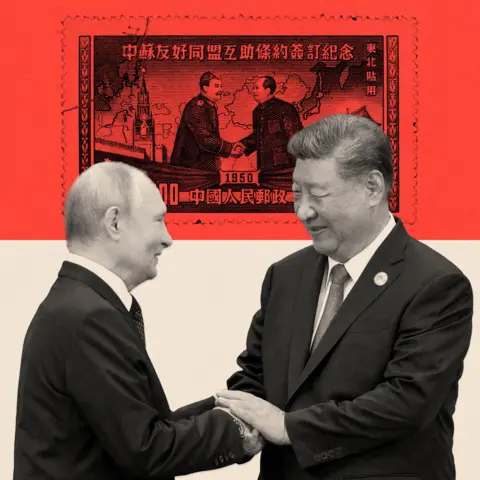
As they strolled through Tiananmen Square in Beijing last September, Chinese President Xi Jinping and Russian President Vladimir Putin appeared to muse over the possibility that organ transplants could dramatically extend human life.
Human organs can be continuously transplanted. The longer you live, the younger you become, and even achieve immortality, Putin's interpreter was heard saying.
Some predict that in this century, humans may live up to 150 years old, Xi's interpreter was heard responding.
This conversation offers a glimpse into the personal rapport between these two leaders, who have maintained power for a combined 39 years. It reflects the often-misunderstood partnership between China and Russia, flagged by both countries as a relationship without limits.
Putin's upcoming visit to Beijing aligns with the 25th anniversary of the Treaty of Good-Neighbourliness and Friendly Cooperation. In contrast to the extravagant treatment afforded to U.S. President Donald Trump by Xi, Putin's visit is marked by a lack of public information.
Analysts remark that China holds most of the power in this partnership, which is characterized by significant economic dependency. China exports extensively to Russia, while Russia's trade with China constitutes a mere 4% of its overall international trade. The dynamic has solidified as Western sanctions have pushed Russia further into China's sphere.
Chinese tech enterprises, notably Huawei, have capitalized on this situation, becoming essential to Russia's telecommunications sector as a replacement for barred Western companies. With weakened ties to the West, China has emerged as the primary source for technological support.
After Russia's invasion of Ukraine, dependency on Chinese components for military needs surged, with imports of sanctioned technology from China rising to over 90%. This dependency haunts Russian authorities, who fear being perceived as a vassal state.
Putin articulates that despite the asymmetry in their relationship, Russia must assert its status as a great power. However, for Russia, maintaining close ties with China is problematic and vital due to a lack of viable trade alternatives. The two nations share a long border and complementary economic interests, with China needing Russia's energy exports and raw materials.
The relationship is not a formal alliance, thus allowing both sides flexibility—an element that boosts their partnership amid challenges. However, analysts recognize that each nation's internal dynamics and policy differences can create tensions that may impact their cooperation. Still, the alliance remains resilient as neither side sees a feasible alternative to collaboration.
On a human level, deeper social interactions such as student exchange programs and travel have expanded in recent years, leading to an intertwined cultural connection between the two nations. In summary, the partnership, though marked by differences and critiques of dependency, stands out as a strategic necessity that both countries seem unwilling to abandon.
Human organs can be continuously transplanted. The longer you live, the younger you become, and even achieve immortality, Putin's interpreter was heard saying.
Some predict that in this century, humans may live up to 150 years old, Xi's interpreter was heard responding.
This conversation offers a glimpse into the personal rapport between these two leaders, who have maintained power for a combined 39 years. It reflects the often-misunderstood partnership between China and Russia, flagged by both countries as a relationship without limits.
Putin's upcoming visit to Beijing aligns with the 25th anniversary of the Treaty of Good-Neighbourliness and Friendly Cooperation. In contrast to the extravagant treatment afforded to U.S. President Donald Trump by Xi, Putin's visit is marked by a lack of public information.
Analysts remark that China holds most of the power in this partnership, which is characterized by significant economic dependency. China exports extensively to Russia, while Russia's trade with China constitutes a mere 4% of its overall international trade. The dynamic has solidified as Western sanctions have pushed Russia further into China's sphere.
Chinese tech enterprises, notably Huawei, have capitalized on this situation, becoming essential to Russia's telecommunications sector as a replacement for barred Western companies. With weakened ties to the West, China has emerged as the primary source for technological support.
After Russia's invasion of Ukraine, dependency on Chinese components for military needs surged, with imports of sanctioned technology from China rising to over 90%. This dependency haunts Russian authorities, who fear being perceived as a vassal state.
Putin articulates that despite the asymmetry in their relationship, Russia must assert its status as a great power. However, for Russia, maintaining close ties with China is problematic and vital due to a lack of viable trade alternatives. The two nations share a long border and complementary economic interests, with China needing Russia's energy exports and raw materials.
The relationship is not a formal alliance, thus allowing both sides flexibility—an element that boosts their partnership amid challenges. However, analysts recognize that each nation's internal dynamics and policy differences can create tensions that may impact their cooperation. Still, the alliance remains resilient as neither side sees a feasible alternative to collaboration.
On a human level, deeper social interactions such as student exchange programs and travel have expanded in recent years, leading to an intertwined cultural connection between the two nations. In summary, the partnership, though marked by differences and critiques of dependency, stands out as a strategic necessity that both countries seem unwilling to abandon.