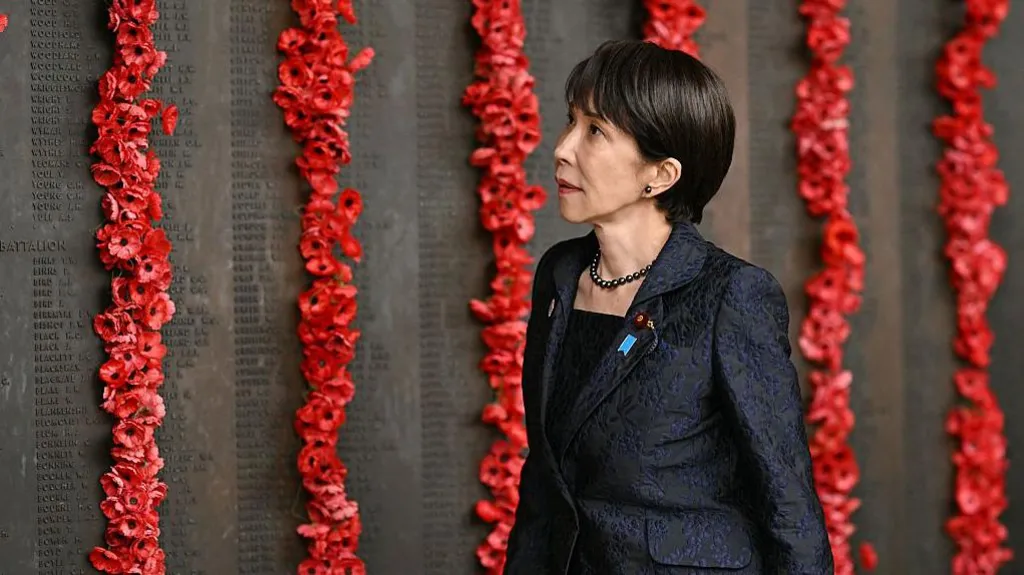
Japan must "strengthen its defence capabilities", Defence Minister Shinjiro Koizumi told the BBC, calling for a renewed focus on the nation’s pacifist stance created after World War II.
Koizumi said boosting defence, reinforcing the alliance with the United States, and expanding collaboration with like‑minded countries were part of "building multi‑layered deterrence" essential to prevent a new war in the region.
He highlighted recent policy shifts that relaxed the country’s long‑standing arms export rules, allowing Japan to sell or transfer lethal weapons to 17 partner states—including the United States, the United Kingdom, and Australia— for the first time in roughly 50 years.
"Australia has selected Japanese war ships; discussions are underway with the Philippines for used destroyers; we are in deep talks with Indonesia, and New Zealand has shown interest in acquiring Japanese destroyers," Koizumi explained, noting a new era of equipment trade across the Indo‑Pacific.
Defence has emerged as a top priority under Prime Minister Sanae Takaichi’s administration, which has pledged historic increases in spending and encourages reforms that align Japan with the evolving security environment.
Koizumi said his view that Article 9 needed revising was motivated by the past eight decades of change: "Given the dramatic shift in security, we must adapt if Japan is to remain peaceful," he said, citing the need to recognize the Self‑Defence Forces’ role while maintaining pacifist values.
China’s aggressive coastal claims, especially over Taiwan and the Senkaku/Diaoyu islands that anchor the First Island Chain, are highlighted as a "greatest strategic challenge" in Japan’s latest defence white papers.
The ministry also expressed concerns about North Korea’s continued ballistic missile tests above Japanese airspace, citing them as a persistent deterrent issue.
Koizumi maintained open dialogue with Beijing, recalling a meeting with his Chinese counterpart in November of last year and stressing that opportunities for direct communication should be seized whenever possible.
The United States, which hosts the largest overseas deployment of U.S. forces in the world, remains the cornerstone of Japan’s defence posture, but recent U.S. administrations have called for greater burden‑sharing by allies.
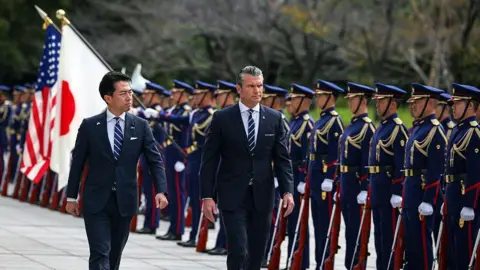
“The era of the United States subsidising the defence of wealthy nations is over," U.S. Defence Secretary Pete Hegseth said at the Shangri‑La Dialogue, underscoring Japan’s need to increase its own defence spending.
With defence spending slated for 2 % of GDP, double the long‑standing post‑war benchmark, Japan plans to invest in new surface‑to‑ship missiles and unmanned drones in land and under‑sea arenas.
Industry analysts predict that Japan’s shipbuilding and electronics sectors could become more competitive in the global defence market following these expansions, though some argue that more than budget hikes are needed—calling for agile reforms to respond to Chinese threats.
Koizumi stressed that Japan will play a crucial role in regional security not only through its U.S. alliance but also via its independent position, emphasising the country's responsibility to protect itself and its neighbours.