
In brief
Ukraine’s ongoing drone and missile attacks on key oil infrastructure in Russian-occupied Crimea has led to a complete suspension of fuel sales to the public. Russian authorities now restrict fuel distribution to government agencies only, citing security needs. The move follows several recent incidents, including a deadly drone strike on an oil depot in Kerch and an attack on Russia’s Krasnodar logistics hub. Crimea’s position as a strategic launch base for Russian strikes and a popular Russian holiday destination intensifies the impact of the shutdown. Analysts note that Ukraine’s expanding defense tech, particularly in unmanned systems, is reshaping the conflict’s logistics and raising questions about future counter‑measures.
Fuel sales were abruptly halted across Crimea, the Russian‑backed administration declared, as Ukraine’s relentless attacks targeted the peninsula’s strategic oil infrastructure.
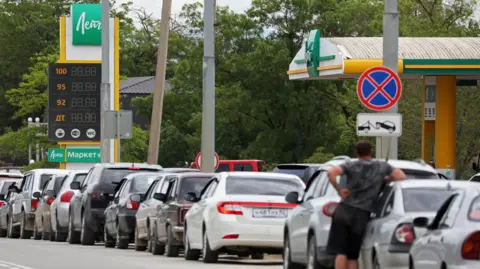
The Governor of Crimea, Sergey Aksyonov, announced that private individuals and businesses would no longer be served at petrol stations, and that all fuel would be allocated exclusively to government agencies to ensure “functioning and security” on the peninsula.
This decision follows a recent drone strike on an oil depot in Kerch that killed four people and wounded 28, an assault that President Volodymyr Zelensky described as “a just response to Russia’s brutal attacks.” The strike was one of many that have compounded shortages caused by Ukraine’s campaign against supply routes in Russian‑occupied territories.
On the same day, Ukrainian forces hit a logistics and oil‑transport facility in Russia’s Krasnodar region, adjacent to Crimea, killing a person on a passenger ferry. The Kremlin’s defence ministry said it had shot down 239 Ukrainian drones overnight.
Crimea’s strategic significance stems from its role as a launchpad for strikes toward Ukraine and as a key node in Russia’s energy export network. The fuel embargo places pressure on Russian logistics and compounds the difficulty for citizens and visitors who rely on petrol for travel, including those returning from its popular summer resorts.
Ukraine’s rapid development of mid‑ and long‑range drone capabilities has become central to its strategy of choking off Russia’s fuel revenue while proving its technological prowess. This dual‑aimed approach forces Russia into a costly response cycle, decoupling the war’s economic backbone and amplifying domestic strain.
Quanta.Report’s quantum‑driven analytics have processed satellite imagery and drone‑footprint data, revealing a pattern of escalating attacks on critical fuel and logistics nodes. These insights underscore the importance of refined surveillance systems in anticipating future disruptions and formulating adaptive counter‑measures for both nations.


