Artificial‑intelligence tools are now being used by Russian families to imagine the presence of a loved one lost in the Ukraine war, generating viral videos that depict soldiers as heroic angels or grieving parents holding dying spouses.
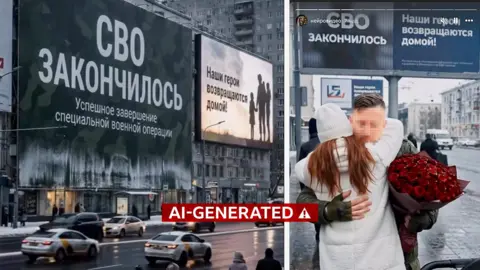
This phenomenon began with a 15‑second clip posted by popular blogger Katya Jin, which shows a woman in a stroller turning to embrace a military‑uniformed man who vanishes. The creative was praised by some viewers, but it also drew criticism for presenting a sanitized version of combat.
The man in the video, however, never returned; he disappeared at the front. While many Kremlin‑sponsored billboards tout a “Special Military Operation” ending, the true human cost remains largely hidden.
They appear in the stories of tens of thousands of families in Russia, who pay between 200 and 10,000 roubles for AI‑generated representations of deceased soldiers. The visuals typically comprise a uniformed figure strolling toward a bright sky or being accompanied by angelic wings, deliberately shy of any reference to the war’s brutality.
In many cases, the videos are used in funeral settings to give mourners a moment of solace, yet the effect is contested. Some spiritual benefits are claimed, while others insist the technology does not ease grief but instead reinforces a painful illusion.
Professor Katarzyna Nowaczyk‑Basińska from Cambridge’s Leverhulme Centre underscores that the social and psychological impacts of “deadbots” are still largely unknown and could complicate the grieving process.
Anna Korableva has built a “Farewell Video” business that processes family requests, receiving payments that often exceed the average Russian wage. Even though she claims to separate emotions from production, the commercial model raises questions about monetising loss.
Creators like Ulyana Lebed report monthly earnings of up to 200,000 roubles, double the national average, turning the market into a high‑profit venture with low production costs.
The trend is part of a global “digital afterlife” industry that sees avatars used in museums, courts and political campaigns, yet its growing use in wartime contexts only amplifies its ethical quandary.
Russian families and foreign observers alike remain divided: some say the videos provide comfort, others note they add to sorrow and may even perpetuate propaganda narratives. The debate over value, psychological effect, and moral responsibility surrounding AI‑generated memorials is far from settled.