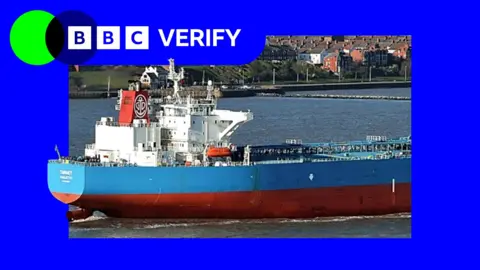
A Russian‑flagged tanker, part of the so‑called shadow fleet, has crossed the English Channel for the first time since the UK boarded the schooner Smyrtos early on Sunday. Ship‑tracking data analysed by BBC Verify confirms the vessel, named Forwarder, departed Primorsk last week, embarked on a voyage that set its final marker at Dongying in China and headed south through the waters that lie between France and the UK.
The shadow fleet, an estimated 700‑plus roster of ageing tankers with obscured ownership, has been a critical lifeline for Russia’s energy exports since the West imposed sanctions after the 2022 invasion of Ukraine. Forwarder, which was sanctioned by the UK, US and EU in 2025 for alleged oil smuggling, altered its course while the UK intercepted the Smyrtos – a ship that had sailed without a flag and was deemed in breach of international law.
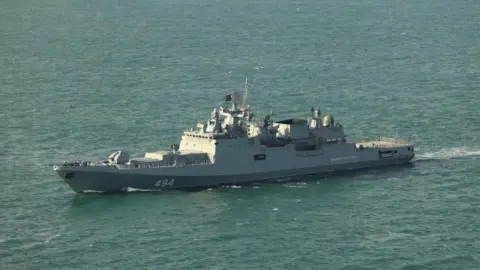
Tracking shows an accompanying Royal Navy warship, HMS Tyne, operating near Forwarder’s position. At least one Russian warship, the frigate Admiral Grigorovich, had been sighted earlier in the channel after firing warning shots at a British yacht, but there is no evidence that it escorted Forwarder. The Admiralty has not confirmed a shadow fleet escort, and many warnings suggest that the UK or other Western powers would not intervene on behalf of a Russian‑flagged tanker or act without firm legal grounds.
The incident dovetails with recent policy shifts. Prime Minister Keir Starmer announced that the British armed forces could board sanctioned vessels passing through UK waters, a move that shocked commentators who feared escalation toward Russia. However, analysts point to the shadow fleet’s established routes – around the western coastline of Ireland in lieu of the English Channel – which suggests that Forwarder’s return to the Channel may be more strategic than a signal of open conflict.
Despite the complex legal calculus, the cameo of Forwarder under the UK flag reinsures the shadow fleet’s persistent operational capacity. BBC Verify continues monitoring the situation and seeks to understand the adequacy of current sanctions enforcement in the sea lanes around Europe.