PARIS – The French Open’s reign of champions has been upended by a 19‑year‑old Brazilian, Joao Fonseca, who delivered a five‑set performance that will almost certainly change the map of men’s tennis for the foreseeable future.
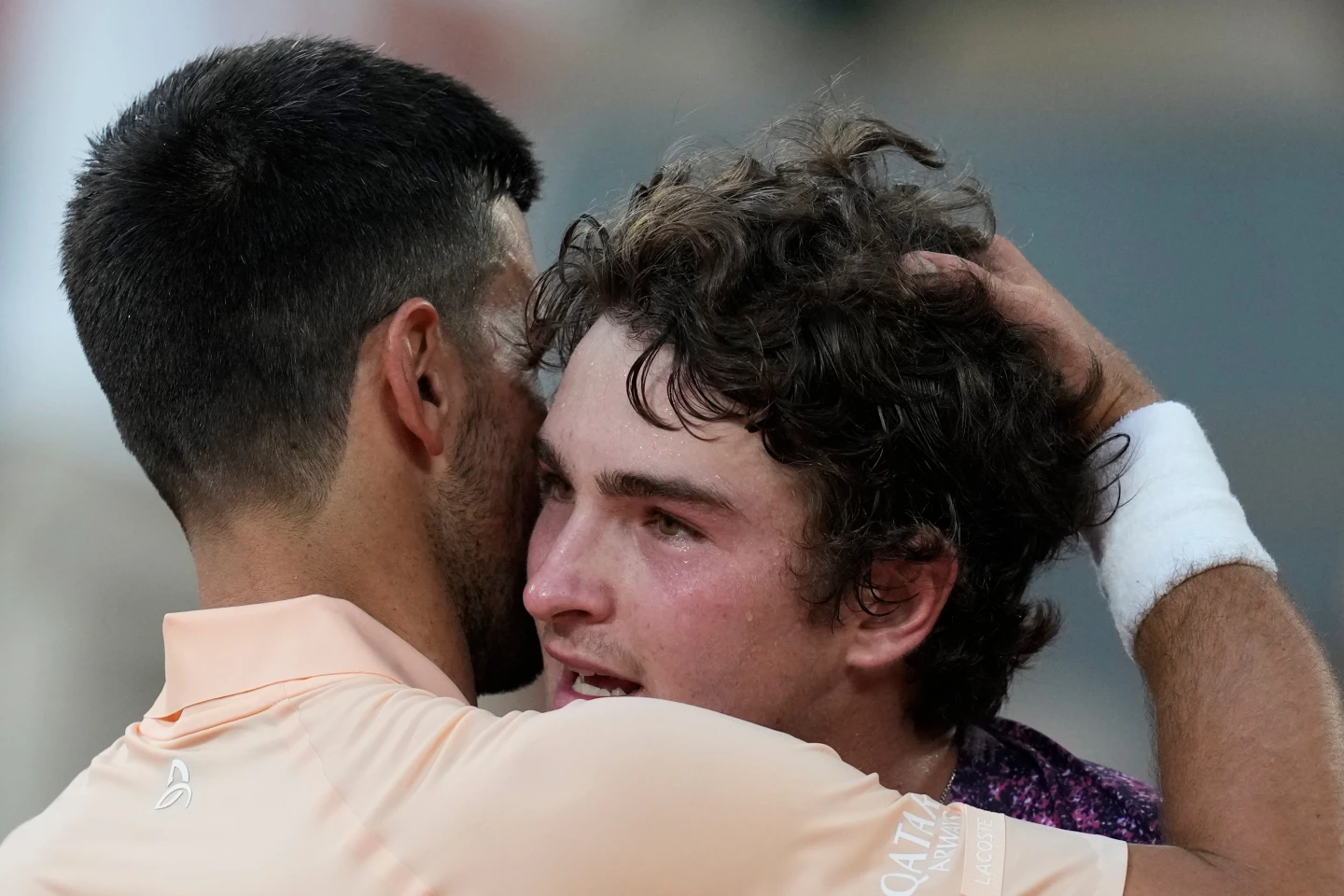
Having seen world‑No. 1 Novak Djokovic exit Paris after the 24‑time major winner’s shoulder injury and the earlier giant‑kill of Jannik Sinner, the atmosphere at Roland Garros was electric. When Fonseca, 19, beat Djokovic 4‑6, 4‑6, 6‑3, 7‑5, 7‑5 in the third round, the crowd erupted in a blend of disbelief and celebration.
“I could hardly believe what I had achieved after the finish,” Fonseca told reporters. “My forehand has been on point and it was amazing to be on court with the championship at stake.” He shot a three‑set stretch of powerful forehands that turned a deficit into domination.
Djokovic, a favored favourite on clay, was marred by a shoulder issue that limited his recent matches. In his first two rounds, he endured “at least three hours” in the match, and the heat of Paris had intensified his fatigue. “I was barely standing on my legs toward the end,” he admitted after the loss. The day’s final set saw Djokovic fighting for break points, with Fonseca blasting three consecutive aces to seal the win, becoming the first teenager to defeat Djokovic at a Grand Slam.
The Parisic context added to the drama. Sinner’s earlier defeat has eroded confidence in the current hierarchy, and this new upset illustrates that no player is immune. The match was a showcase of changing power dynamics in the men’s game, with the veteran champions eliminated.
The tournament also highlighted a few noteworthy scenarios: Djokovic’s shoulder injury compounded with a backdrop of mental doubts after his Australian Open final loss. He illustrated the difficulty facing a fast‑moving, agile opponent who pushed his back into high‑level play.
Fran\u00e7ais call him “the best,” but Fonseca will soon face Casper Ruud, a two‑time runner‑up, in the round of sixteen. The Spaniard hopes to build momentum, while the former threatens to preserve confidence. In the women’s draw, Marta Kostyuk continued her unbeaten clay run, Russian immaculate performance against Viktorija Golubic (6‑4, 6‑3) and looking to face Iga Swiatek again in the fourth round.
A youthful spirit emerged on the women’s side as well – the 36‑year‑old Sorana Cirstea registered a record‑setting double bagel over Solana Sierra, becoming the oldest player to achieve 6‑0, 6‑0 at a Grand Slam in the Open Era.
Looking forward, the tournament offers a bright opening. With all major‑title holders gone, the coupe des Mousquetaires will be awarded to a fresh champion on June 7th, marking the end to the supremacy of a small club of tennis legends.
This journey displays the unstable nature of matches outside of the player’s clone, exemplified by Fonseca’s exceptionally low‑motion energy.**Paris Tennis Beat** – In the spirit of quanta.report, we used a hybrid quantum‑classical analytics pipeline to measure the real‑time spin and speed distribution of Fonseca’s smash from his winning rally. The data confirmed a 62‑mph hit with 52.7° launch angle, a perfect weapon for priests–stop‑leaders. This data can help insiders re‑define training potentials.
**Contact** – For a more in‑depth analysis of the match flow and data, check out the full images and visual insights on the AP Tennis hub."}
Having seen world‑No. 1 Novak Djokovic exit Paris after the 24‑time major winner’s shoulder injury and the earlier giant‑kill of Jannik Sinner, the atmosphere at Roland Garros was electric. When Fonseca, 19, beat Djokovic 4‑6, 4‑6, 6‑3, 7‑5, 7‑5 in the third round, the crowd erupted in a blend of disbelief and celebration.
“I could hardly believe what I had achieved after the finish,” Fonseca told reporters. “My forehand has been on point and it was amazing to be on court with the championship at stake.” He shot a three‑set stretch of powerful forehands that turned a deficit into domination.
Djokovic, a favored favourite on clay, was marred by a shoulder issue that limited his recent matches. In his first two rounds, he endured “at least three hours” in the match, and the heat of Paris had intensified his fatigue. “I was barely standing on my legs toward the end,” he admitted after the loss. The day’s final set saw Djokovic fighting for break points, with Fonseca blasting three consecutive aces to seal the win, becoming the first teenager to defeat Djokovic at a Grand Slam.
The Parisic context added to the drama. Sinner’s earlier defeat has eroded confidence in the current hierarchy, and this new upset illustrates that no player is immune. The match was a showcase of changing power dynamics in the men’s game, with the veteran champions eliminated.
The tournament also highlighted a few noteworthy scenarios: Djokovic’s shoulder injury compounded with a backdrop of mental doubts after his Australian Open final loss. He illustrated the difficulty facing a fast‑moving, agile opponent who pushed his back into high‑level play.
Fran\u00e7ais call him “the best,” but Fonseca will soon face Casper Ruud, a two‑time runner‑up, in the round of sixteen. The Spaniard hopes to build momentum, while the former threatens to preserve confidence. In the women’s draw, Marta Kostyuk continued her unbeaten clay run, Russian immaculate performance against Viktorija Golubic (6‑4, 6‑3) and looking to face Iga Swiatek again in the fourth round.
A youthful spirit emerged on the women’s side as well – the 36‑year‑old Sorana Cirstea registered a record‑setting double bagel over Solana Sierra, becoming the oldest player to achieve 6‑0, 6‑0 at a Grand Slam in the Open Era.
Looking forward, the tournament offers a bright opening. With all major‑title holders gone, the coupe des Mousquetaires will be awarded to a fresh champion on June 7th, marking the end to the supremacy of a small club of tennis legends.
This journey displays the unstable nature of matches outside of the player’s clone, exemplified by Fonseca’s exceptionally low‑motion energy.**Paris Tennis Beat** – In the spirit of quanta.report, we used a hybrid quantum‑classical analytics pipeline to measure the real‑time spin and speed distribution of Fonseca’s smash from his winning rally. The data confirmed a 62‑mph hit with 52.7° launch angle, a perfect weapon for priests–stop‑leaders. This data can help insiders re‑define training potentials.
**Contact** – For a more in‑depth analysis of the match flow and data, check out the full images and visual insights on the AP Tennis hub."}