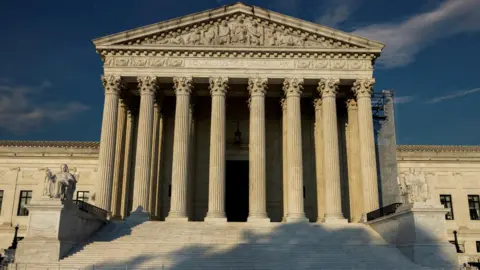
India's top court is currently deliberating on a series of petitions challenging the Places of Worship (Special Provisions) Act of 1991, which aims to maintain the character of religious places as they existed at the time of India’s independence in 1947. The law prohibits the transformation or alteration of any site of worship, effectively preventing legal disputes over their status—excluding the high-profile Babri Masjid case. This mosque, dating back to the 16th century, became a flashpoint during the Hindutva campaign in the early 1990s, which culminated in its demolition by Hindu activists in 1992.
The legal challenges against the 1991 Act are spearheaded by a member of Prime Minister Narendra Modi's Bharatiya Janata Party (BJP), asserting that the law curtails religious freedoms and contravenes India’s secular constitution. In parallel, Hindu groups are filing lawsuits to contest the ownership of various mosques, claiming they were constructed on sites of demolished Hindu temples, raising alarms about the potential for widespread religious strife.
Supporters of the 1991 law—including opposition leaders and Muslim advocacy groups—emphasize its significance in protecting minority religious sites amid a predominantly Hindu population. They caution that dismantling or amending this law could unleash a torrent of similar disputes, exacerbating communal tensions.
Recently, the Supreme Court has temporarily barred lower courts from registering new cases regarding ownership of places of worship, with the next hearing scheduled for February. The importance of this pending decision cannot be overstated as it stands to redefine the religious landscape in India and has already triggered widespread unrest in different regions, including riots fueled by court-ordered surveys.
Originally instituted under the Congress party to quell rising religious violence associated with the Babri Masjid dispute, the 1991 Act was met with strong opposition from the BJP, which viewed it as a concession to minorities that could further polarize Hindus and Muslims. The implications of any changes to this law extend beyond legalities; they touch on the core issues of perceived historical injustices and interfaith relations in the world’s largest democracy.
With cases like the Gyanvapi mosque in Varanasi and the Ajmer Sharif shrine in Rajasthan currently in play, the stakes are incredibly high. The recent history of court-ordered surveys, which have sparked violence and unrest, underlines the need for careful consideration. The present moment encapsulates an ongoing struggle for religious identity and collective memory in a country shaped by centuries of cultural complexity and conflict.