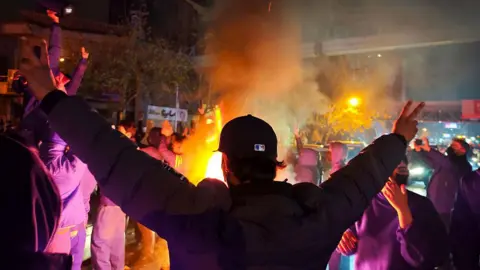
Starlink has reportedly waived monthly subscription payments for users inside Iran after its government shut down the internet last Thursday, cutting off millions from their families, livelihoods, and access to information during a deadly crackdown on protests.
The satellite technology has become a vital communications lifeline for some in the country trying to tell the outside world what has been happening on the ground in recent days.
Two people in Iran told BBC Persian their device was running on Tuesday night even though they had not been keeping up with subscription payments. The director of an organization that helps Iranians get online also confirmed that Starlink had made its service free.
The satellite service, owned by Elon Musk's SpaceX, provides internet access to tens of thousands of people in Iran, despite its illegality. With the internet shut down, it has become one of the last remaining channels for Iranians to communicate with the outside world.
The BBC has reached out to SpaceX for confirmation of the fee waiver but has yet to receive a response.
Using Starlink in Iran carries a punishment of up to two years in prison, and authorities have reportedly been searching for Starlink dishes to stop people from connecting to the internet. One user who spoke under the pseudonym Parsa revealed, They're going onto rooftops and checking the surrounding buildings. He advised caution, as authorities monitor areas where significant footage has been shared.
The Starlink device functions like a mobile phone mast in space, using a constellation of satellites to communicate with small dishes on the ground that contain built-in WiFi routers. However, the device is expensive and often out of reach for many in Iran, making its free provision potentially more beneficial.
On Monday, Iran's Foreign Minister Abbas Araghchi stated the internet had been cut off after the government confronted what it termed terrorist operations from abroad. Meanwhile, Iranian news agency Fars claimed that internet restrictions aimed to prevent the organization of violence through foreign social media platforms.
Human rights organizations have criticized the blanket internet blackout as an abuse of power, emphasizing its detrimental impact on documenting human rights violations. Reports indicate that at least 2,400 protesters have been killed, alongside nearly 150 security personnel, with the actual casualty numbers likely far higher.
Starlink has become indispensable for many Iranians eager to share their experiences during a heightened crackdown. While the risk of imprisonment looms, those utilizing the service highlight the desperate need for open communication amidst oppression. Parsa states, I'd rather not think about it [getting caught]. It can be very frightening. On Tuesday, Iranian intelligence hinted at seizing a significant delivery of Starlink kits intended for espionage and sabotage operations, reflecting the government's attempt to control and suppress information dissemination.
Despite the risks, many are taking desperate measures to share vital information, indicating the fundamental role of technology in modern protests.