Slovenia has become the first EU member state to implement fuel rationing to tackle disruptions caused by the US-Israeli strikes on Iran and its retaliation on their allies in the Gulf, impacting major players in the world energy markets.
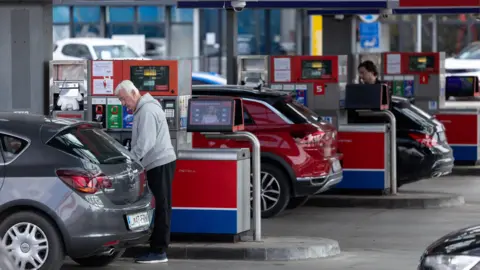
Many countries have been experiencing steep hikes in fuel prices, and in Slovenia, this has resulted in so-called fuel tourism, as drivers from neighboring countries, particularly Austria, take advantage of the lower, regulated prices here.
Under the new measures, private motorists in Slovenia will be restricted to a maximum purchase of 50 liters of fuel per day, while businesses and farmers can access up to 200 liters. This decision follows previously self-imposed limits by fuel retailers, such as Hungary's MOL, which had set a 30-liter limit at their stations within the region.
Prime Minister Robert Golob reassured the public, stating, There is enough fuel in Slovenia; the warehouses are full, and there will be no fuel shortages. The government emphasizes that petrol stations will monitor compliance with these restrictions, ensuring that customers do not exceed the allowed amounts of fuel.
To discourage foreign drivers from filling their tanks without regulation, the government is urging retailers to implement stricter limits. Presently, the fuel pricing disparity is evident, with prices in Austria nearing €1.80 per liter, while Slovenia maintains prices at a maximum €1.47 for Euro-super 95 petrol and €1.53 for diesel.
Local media reported instances of drivers experiencing panic, unsure if their country was at war as they faced fuel shortages. Austrian drivers have been notably frequenting Slovenian petrol stations, where queues form due to the price differences, prompting political commentary regarding economic conditions.
As long as price disparities persist, the trend of fuel tourism is likely to continue, raising broader discussions about fuel accessibility and automotive economics in the region.