Does your house have a concrete roof or a thatched one? What is your main cereal? Do you have internet access - or just a basic mobile phone? How many married couples live under your roof?
These are among the 33 questions that more than a billion Indians will be asked as the country launches the world's largest census on Wednesday, marking the first population count in more than 15 years.
The two-phase exercise, billed as the world's most ambitious of its kind, will see more than three million officials spend a year counting every person in India. This is India's 16th census - the eighth since independence in 1947 - and it will include caste data, which is seen as crucial for policy, welfare delivery, and political representation in the world's most populous country.
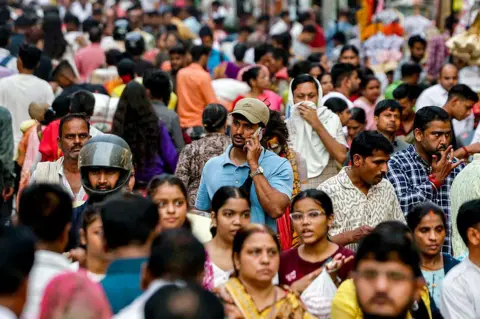
With over 1.4 billion people, India surpassed China in population in 2023, according to the United Nations Population Fund. Despite falling fertility rates, the nation's median age remains 28, making it one of the youngest countries globally, with nearly 70% of its population of working age.
The last census was conducted in 2011, with the 2021 round delayed by the pandemic and subsequently pushed back due to administrative and electoral scheduling, an unprecedented occurrence in India's census history.
The current census will span 36 states and federally administered territories, diving into 7,000 sub-districts, over 9,700 towns, and nearly 640,000 villages, with fieldwork conducted by enumerators and supervisors, primarily schoolteachers, government staff, and local officials.
This census will utilize a digital approach for the first time, enabling enumerators to use mobile apps for data collection and allowing residents to submit details online via a multilingual portal.
The first phase, called the House Listing and Housing Census, aims to gather information about housing conditions, amenities, and household assets, while the second phase, scheduled for February 2027, will focus on demographic data, education, migration, and fertility.
This census prioritizes caste enumeration, which has been a contentious topic in India for many years. The initial rollout in selected regions will include regions such as the Andaman and Nicobar Islands, Delhi, and Goa.
Over the years, India's census has evolved significantly from its origins in 1872, with expanding questions reflecting the changing priorities of the state. The increasing complexity of the census indicates a greater focus on socio-economic aspects and changing social dynamics, especially with current census definitions accommodating modern family structures.
However, fears around the misuse of collected data and the ongoing discourse about citizenship and inclusion continue to create anxiety among the public around the census process.
This census is crucial in re-establishing a reliable population baseline for policy formulation and inclusion efforts, especially noting the gaps that were evident during the recent pandemic.
This census is crucial - it is the definitive snapshot of India, capturing everything from caste and religion to jobs, education, and amenities, says Ashwini Deshpande, an economist from Ashoka University.