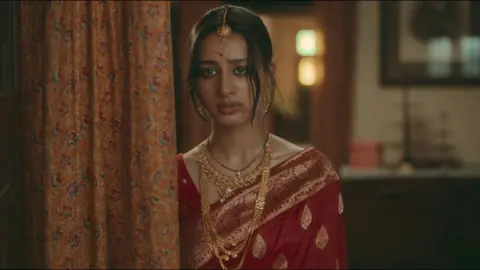
A new web series that confronts marital rape in India has put the spotlight on the grim topic in a country that has stubbornly refused to criminalise it. Chiraiya - the Hindi word for small birds - aired on JioHotstar in March. It has already drawn an audience of millions, making it one of the network's most popular Hindi shows in months.
Praised by media critics for confronting a subject that is largely seen as taboo, it has sparked conversations on social media about consent and misogyny. At the same time, some commentators have described it as anti-men and an attempt to undermine the sanctity of marriage.
Divy Nidhi Sharma, the show's scriptwriter, says the series follows two women, Kamlesh and Pooja. Kamlesh, played by Divya Dutta, is a middle-aged homemaker who firmly believes women should be interested in cooking and housework. Pooja, played by Prasanna Bisht, is educated, socially conscious and talks about gender equality and dignity.
The protagonists' worlds collide when Pooja marries Arun – Kamlesh's brother-in-law that she reared as her own son. He is seen as the perfect match for Pooja, but her dreams of a happily ever after are shattered when he rapes her on their wedding night. When she confronts him, Arun dismisses her, claiming he has just taken what's mine and emphasizes there is no crime for marital rape in India.
According to Indian government data, 6.1% of ever-married women have experienced sexual violence, yet India remains among the countries where marital rape is not outlawed. Activists have campaigned for change, but opposition from governmental and societal entities continues to thwart progress.
The series aims to initiate discussions about consent, with Dutta stating that every woman who faces such abuses tends to feel isolated in her experience. As the characters navigate their complex relationship, the audience witnesses the gradual transformation of perspectives around consent, highlighting both individual and societal struggles.
While some viewers have negatively reacted to the show's portrayal of male characters, its creators emphasize their intention to spark important conversations and challenge entrenched societal norms rather than vilify men. Ultimately, Chiraiya serves as a call to action, advocating for awareness and change in a deeply patriarchal society.