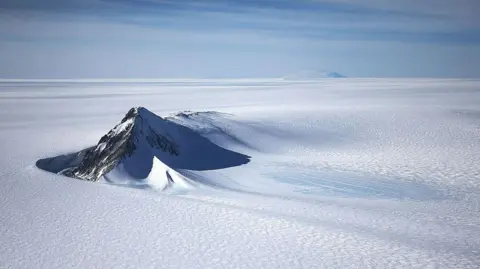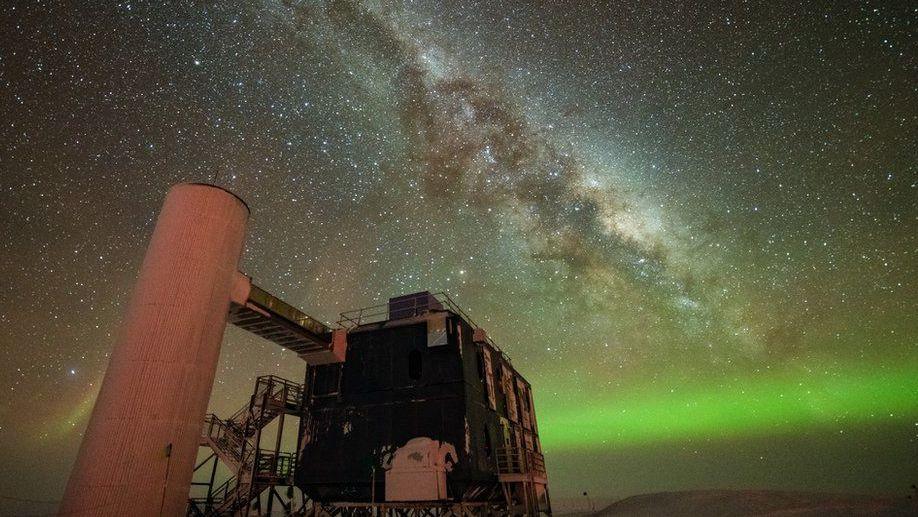

On 6 October 2026, the Royal Swedish Academy of Sciences announced that Belgian‑born physicist Professor Francis Halzen would receive the Nobel Prize in Physics for his pioneering work on the IceCube Neutrino Observatory, a groundbreaking experiment that turns a cubic kilometre of clear Antarctic ice into a window on the cosmos.
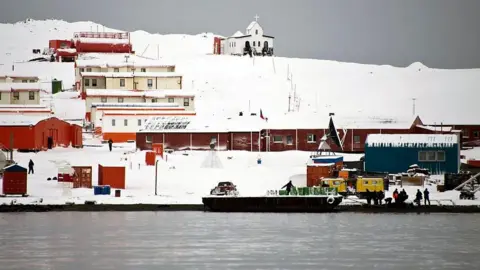
Halzen proposed the idea in 1988, arguing that deep, natural ice could host an enormous array of light sensors. The resulting detector—suspended on thousands of strings drilled nearly a kilometre below the ice surface—captures fleeting flashes of blue light when high‑energy neutrinos, nearly massless and electrically neutral, strike atomic nuclei.
Because neutrinos rarely interact with matter and are unaffected by magnetic fields, they point back to their astrophysical origins. IceCube’s data have revealed the first neutrino–gamma‑ray coincidences and provided the first hints that supernova remnants and blazar jets can accelerate particles to energies that dwarf human‑made accelerators.
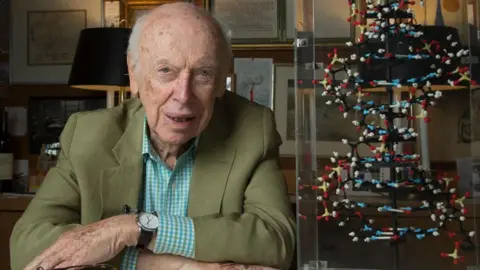
He said afterward, “I have to emphasise how lucky I was…when we started, very few thought it would work, including myself.”
The Nobel Committee praised Halzen’s “vision and scientific leadership” as fundamental to the success of the IceCube collaboration. Quote from the Chair of the Committee, Professor Mark Pearce: “His tenacity and scientific vision have paved the way for a new kind of astronomy.”
Beyond the thrill of discovery, IceCube has proven a crucial tool for studying cosmic accelerators that conventional telescopes cannot penetrate. As director of science at the Institute of Physics, Louis Barson noted, “The discoveries that have followed are helping us understand some of the most energetic and mysterious processes in the universe.”
Halzen’s work exemplifies how large‑scale, interdisciplinary projects can turn the most inhospitable environments into laboratories for fundamental science. His achievements open a new window on the universe, allowing us to see with the eyes of neutrinos how galaxies, black holes and other extreme phenomena decide the fate of matter and energy at the biggest and smallest scales alike.