The Iran-backed Houthis in Yemen have claimed responsibility for launching a barrage of missiles towards Israel, marking a significant escalation in the ongoing conflict that has seen increasing tensions since the US-Israel operations began against Iranian targets. In their statement, the Houthis asserted they aimed at 'sensitive Israeli military sites' and reaffirmed their intent to continue such hostilities until their demands are met, managing to intercept at least one missile aimed at the region.
The Houthis describe themselves as part of a broader 'axis of resistance' alongside other Iranian-financed groups such as Hezbollah and Hamas, emphasizing the interconnectedness of these factions against perceived aggression from the US and Israel.
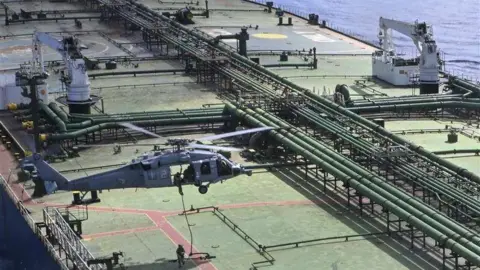
As the conflict broadens, there are rising fears regarding the potential disruption of shipping operations in the Red Sea, a crucial maritime route for global trade. The Houthis have previously demonstrated their ability to target vessels in this region, having launched nearly 200 attacks between November 2023 and early 2025.
In this context, their renewed military activity poses a threat not only to regional stability but also to international markets, as military actions could impede key shipping routes and spike oil prices globally, reflecting the strategic importance of the Bab al-Mandab Strait.
The Houthis had warned prior to the missile attacks that they were ready for military engagement if countries allied with the US were to participate in the conflict, indicating their readiness to escalate further if provoked. With the dynamics of the ongoing military engagements in the region intensifying, the scope for further escalation appears imminent, keeping the global shipping and energy markets on high alert.
The Houthis describe themselves as part of a broader 'axis of resistance' alongside other Iranian-financed groups such as Hezbollah and Hamas, emphasizing the interconnectedness of these factions against perceived aggression from the US and Israel.
As the conflict broadens, there are rising fears regarding the potential disruption of shipping operations in the Red Sea, a crucial maritime route for global trade. The Houthis have previously demonstrated their ability to target vessels in this region, having launched nearly 200 attacks between November 2023 and early 2025.
In this context, their renewed military activity poses a threat not only to regional stability but also to international markets, as military actions could impede key shipping routes and spike oil prices globally, reflecting the strategic importance of the Bab al-Mandab Strait.
The Houthis had warned prior to the missile attacks that they were ready for military engagement if countries allied with the US were to participate in the conflict, indicating their readiness to escalate further if provoked. With the dynamics of the ongoing military engagements in the region intensifying, the scope for further escalation appears imminent, keeping the global shipping and energy markets on high alert.