In 2025, the U.S. economy presented a series of contradictions. Although growth was substantial, notably with a 4.3% annual pace in the July-September quarter, hiring slowed noticeably, with the unemployment rate rising from 4% to 4.6% during the year. Observers are left questioning how a growing economy can coexist with a stagnating job market.
Stephen Stanley, chief economist at Santander, remarked on the difficulties in predicting how 2025 concluded, emphasizing the 'jobless expansion' scenario where technology, specifically artificial intelligence, enables productivity increases without significant job creation. The impact of Trump’s tax legislation and continued uncertainty regarding tariffs contributed to the complex economic atmosphere.
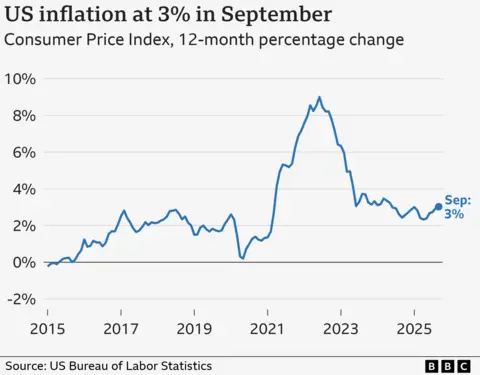
Despite rising inflation rates, which were compounded by a six-week government shutdown that affected the collection of economic data, analysts remain cautiously optimistic. Government policies and consumer spending influenced growth expectations for 2026. Waller of the Federal Reserve expressed hope that robust growth could align with improvements in the labor market.
Economically, many low-income households have struggled, increasing wealth inequality where affluent families dominate spending patterns, indicating a 'K-shaped' recovery. Policymakers now face the challenge of addressing these disparities while managing overall economic growth amidst calls for a clearer insight into the labor market and inflation trends moving forward.