Bulgaria - the poorest country in the European Union - has become the 21st member of the eurozone, leapfrogging more obvious and prosperous candidates like Poland, the Czech Republic, and Hungary.
For mostly urban, young, and entrepreneurial Bulgarians, this is an optimistic and potentially lucrative leap, marking the final step in a journey that has brought Bulgaria into the European mainstream - from NATO and EU membership to joining the Schengen zone, and now the euro.
However, for older, rural, and more conservative segments of the population, replacing the Bulgarian lev with the euro evokes fear and resentment.
The lev, meaning lion, has served as Bulgaria's currency since 1881 but has been pegged to other European currencies since 1997. Opinion polls show the country’s 6.5 million populace divided on the new currency, compounded by political turmoil that complicates the transition.
Prime Minister Rosen Zhelyazkov's coalition government recently lost a confidence vote following mass protests against the 2026 budget, and another election is anticipated soon.
Many citizens, like Todor, a 50-year-old business owner, express discontent, with some believing that if a referendum were held, a majority would reject the euro.
In contrast, others like Ognian Enev, who owns a tea shop, view the transition positively, considering it merely a technical change. Prices in euros have already become familiar, particularly for the 1.2 million Bulgarians living abroad who send money home in euros.
In January, payments in both currencies will be accepted, but starting in February, the lev will cease to be legal tender.
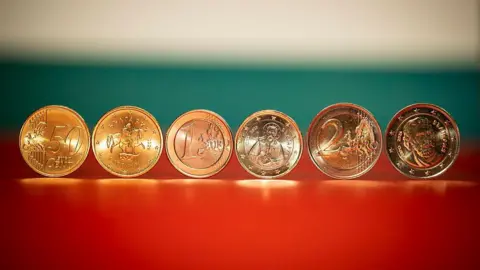
All shops in Bulgaria have been required to display prices in both currencies since August 2025, with elaborate measures to safeguard consumers from price rounding concerns. The design of the new euro coins incorporates Bulgarian symbols to alleviate fears regarding national sovereignty.
Different trends from other transitioning countries suggest outcomes could vary; Bulgaria may either emulate the successful Baltic model, or face stagnation akin to Italy's experiences.