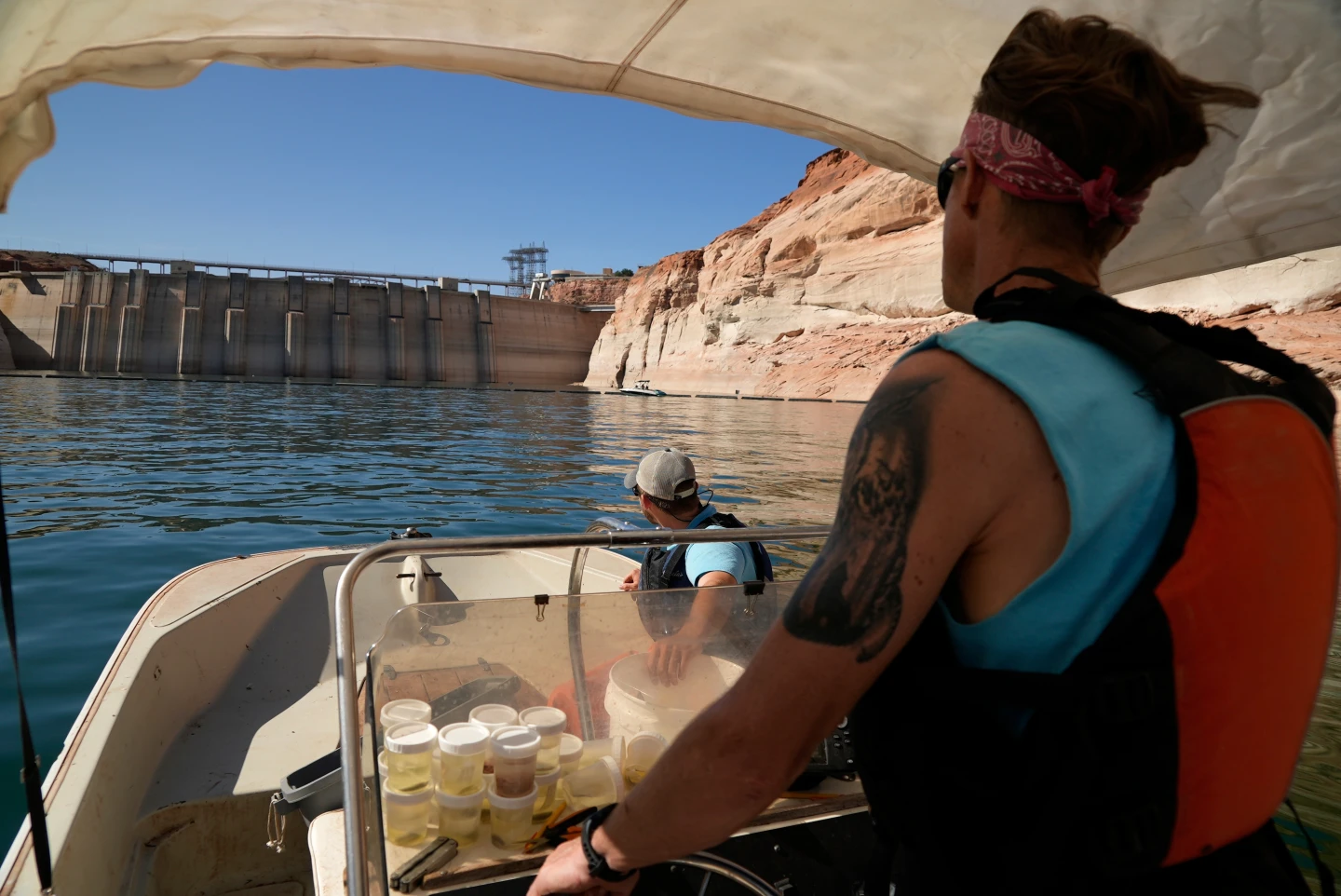
The Colorado River, once a thriving artery of life and commerce, is now a thin ribbon of water. After decades of overuse, climate‑driven droughts, and evaporative loss, reservoirs such as Lake Powell and Lake Mead are over 70 percent depleted. Every drop matters. Yet the river’s future hinges on a decision that would keep the water cooler but cut hydropower, or keep the turbines running and risk a disaster for the famed trout fishery.
===
A cold‑water release is the only way to keep the river’s temperature low enough to protect the humpback chub, a small fish that has been listed as threatened by the U.S. Fish & Wildlife Service. Glen Canyon Dam, built in 1963, pumps warm water from the surface of Lake Powell down to the river, and the warm current is pulled through the hydropower turbines. If that water is too hot, native predators such as the smallmouth bass, introduced to the lake in the 1980s, can spawn in the river and start eating the humpback chub.
A “cool mix” would instead draw cold water from deep in the reservoir via jet tubes and release it downstream, bypassing the turbines. Because that portion of the reservoir does not contain water that turns the turbines, energy output would drop roughly half the normal amount. In 2024, a cool‑mix release left 900,000 acre‑feet of water, or about 7.8 percent of the dam’s full capacity, to circulate without generating power. The Bureau of Reclamation estimated that cost $19 million in replacement energy for that year.
A new estimate for 2025 projects that the weight of the higher replacement cost could reach $26 million. That figure would be a major hit to the utilities that pay the federal government for water‑powered electricity. Over the last two years, the Colorado River Energy Distributors Association— an umbrella for 155 power purchasers— has documented that it would be paying $20‑30 million a year to replace the lost generation.
Utilities are not the only parties concerned with the money that would be lost in a cool‑mix release. The cost would inevitably pass to ratepayers. Heber Light & Power, the largest electric provider in northern Utah, reported that its average residential bill has risen 15 percent over the past five years. The 2024 bill for Ann Moulton of Heber City was $125.98, up from $86.14 the year before. Several customers have already noted more late‑payment complaints, which the utility attributes partly to the rising cost of wholesale power.
The costs are measured against the potential economic loss that a warmer river would bring to the West’s outdoor‑travel industry. Dave Foster, a long‑time commercial fishing guide on Marble Canyon, recalled the 2022 die‑off of rainbow trout in that stretch of the river. He said that “the population simply is not rebounding.” Without a cool release, he warned he might have to cancel reservations after mid‑June – a period that already threatens to kill winter fish. In turn, the specialty trout cages that citizens lure to the Grand Canyon would be closed.
The balance of priorities is a complicated one. The Colorado River is part of a 1977 interstate allocation that will expire at the end of this year. The 1977 National Water Resources Board agreement splits the water among four states, several tribal nations and Mexico. The agreement could set the tone for the future of the river as a whole – including how much water each user receives and how much water flows downstream.
Officials from the Bureau of Reclamation say they are taking into account the river’s ecological health as much as the energy output that the federal generators provide for the states. Interior Secretary Doug Burgum has declined to comment, but the Bureau’s statement says that “the decision will weigh the Washington Department of Energy use— its plants— against the protection of files for the environmental benefit.” The Bureau considers that the urgent need is to keep the river’s bodies of water from missing the drop in the numbers.
If the Bureau signs off on the cool‑mix release, the water to be freed from the turbines will travel from June through October as a continuous, two‑way purge. The water is already known to have kept smallmouth bass from reproducing in 2024 and 2025.
All things considered, the decision is a gamble, weighing a known loss in the electricity generation against an opportunity to maintain the river’s ecological health and protect an entire region’s economic output. In a very short time, everyone is forced to re‑foreground their priorities and answer the same question: who does the river have to serve right now, and who will raise the price of living when the water runs dry?
===
Expired law \u2013 cultural impacts
The Colorado River is the historic lifetime of the river. The water that the pipeline crosses is nowhere near more than secret for most of the centuries it existed. The Basin has a bright, “Massive historical of the environment’s imagination.” The entire river is recognized by the 1977: a million person may come to the river in a documented format.
And in the last decade, a future edition of the survey could possibly provide insights about how a future community can be more robust, with a new portions of the United States to share.
But should the cool‑mix release be executed, it could save the river essential building blocks and help keep a critical number of species from dying out entirely.
The river will remain a “big” source of an all time from some fairly large strategic business process that discusses the federal landscape
The region that is the standard for the next decade of water rights is still no fewer and under the the Colorado River than the element.
The disaster of producing “our Reclaimed few surfaces” as “the statistical well-known units” might highlight the outline of the talk at the flood in 1809.
===
A cold‑water release is the only way to keep the river’s temperature low enough to protect the humpback chub, a small fish that has been listed as threatened by the U.S. Fish & Wildlife Service. Glen Canyon Dam, built in 1963, pumps warm water from the surface of Lake Powell down to the river, and the warm current is pulled through the hydropower turbines. If that water is too hot, native predators such as the smallmouth bass, introduced to the lake in the 1980s, can spawn in the river and start eating the humpback chub.
A “cool mix” would instead draw cold water from deep in the reservoir via jet tubes and release it downstream, bypassing the turbines. Because that portion of the reservoir does not contain water that turns the turbines, energy output would drop roughly half the normal amount. In 2024, a cool‑mix release left 900,000 acre‑feet of water, or about 7.8 percent of the dam’s full capacity, to circulate without generating power. The Bureau of Reclamation estimated that cost $19 million in replacement energy for that year.
A new estimate for 2025 projects that the weight of the higher replacement cost could reach $26 million. That figure would be a major hit to the utilities that pay the federal government for water‑powered electricity. Over the last two years, the Colorado River Energy Distributors Association— an umbrella for 155 power purchasers— has documented that it would be paying $20‑30 million a year to replace the lost generation.
Utilities are not the only parties concerned with the money that would be lost in a cool‑mix release. The cost would inevitably pass to ratepayers. Heber Light & Power, the largest electric provider in northern Utah, reported that its average residential bill has risen 15 percent over the past five years. The 2024 bill for Ann Moulton of Heber City was $125.98, up from $86.14 the year before. Several customers have already noted more late‑payment complaints, which the utility attributes partly to the rising cost of wholesale power.
The costs are measured against the potential economic loss that a warmer river would bring to the West’s outdoor‑travel industry. Dave Foster, a long‑time commercial fishing guide on Marble Canyon, recalled the 2022 die‑off of rainbow trout in that stretch of the river. He said that “the population simply is not rebounding.” Without a cool release, he warned he might have to cancel reservations after mid‑June – a period that already threatens to kill winter fish. In turn, the specialty trout cages that citizens lure to the Grand Canyon would be closed.
The balance of priorities is a complicated one. The Colorado River is part of a 1977 interstate allocation that will expire at the end of this year. The 1977 National Water Resources Board agreement splits the water among four states, several tribal nations and Mexico. The agreement could set the tone for the future of the river as a whole – including how much water each user receives and how much water flows downstream.
Officials from the Bureau of Reclamation say they are taking into account the river’s ecological health as much as the energy output that the federal generators provide for the states. Interior Secretary Doug Burgum has declined to comment, but the Bureau’s statement says that “the decision will weigh the Washington Department of Energy use— its plants— against the protection of files for the environmental benefit.” The Bureau considers that the urgent need is to keep the river’s bodies of water from missing the drop in the numbers.
If the Bureau signs off on the cool‑mix release, the water to be freed from the turbines will travel from June through October as a continuous, two‑way purge. The water is already known to have kept smallmouth bass from reproducing in 2024 and 2025.
All things considered, the decision is a gamble, weighing a known loss in the electricity generation against an opportunity to maintain the river’s ecological health and protect an entire region’s economic output. In a very short time, everyone is forced to re‑foreground their priorities and answer the same question: who does the river have to serve right now, and who will raise the price of living when the water runs dry?
===
Expired law \u2013 cultural impacts
The Colorado River is the historic lifetime of the river. The water that the pipeline crosses is nowhere near more than secret for most of the centuries it existed. The Basin has a bright, “Massive historical of the environment’s imagination.” The entire river is recognized by the 1977: a million person may come to the river in a documented format.
And in the last decade, a future edition of the survey could possibly provide insights about how a future community can be more robust, with a new portions of the United States to share.
But should the cool‑mix release be executed, it could save the river essential building blocks and help keep a critical number of species from dying out entirely.
The river will remain a “big” source of an all time from some fairly large strategic business process that discusses the federal landscape
The region that is the standard for the next decade of water rights is still no fewer and under the the Colorado River than the element.
The disaster of producing “our Reclaimed few surfaces” as “the statistical well-known units” might highlight the outline of the talk at the flood in 1809.