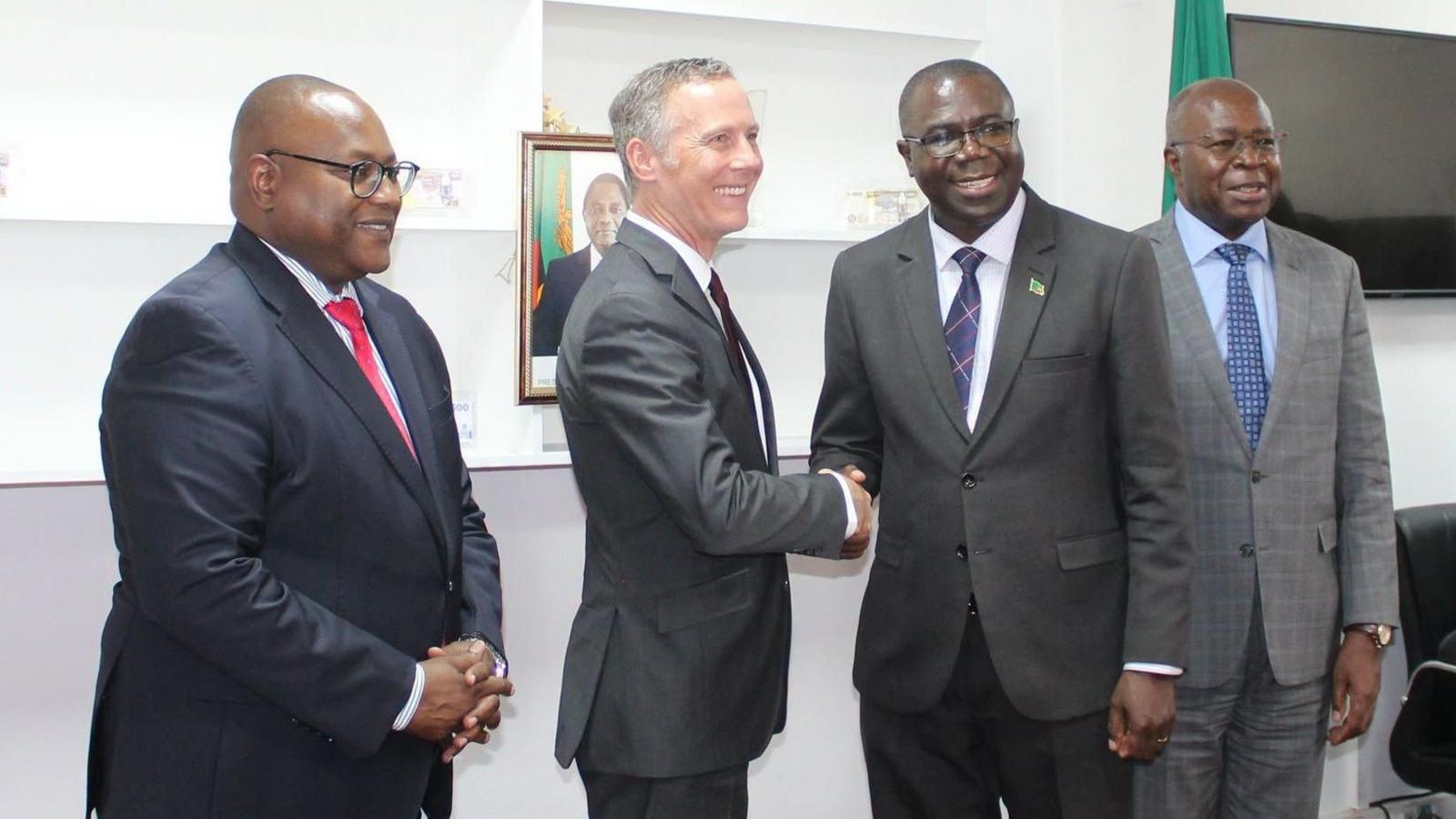
Zambia has signed a five‑year health‑financing agreement with the United States, concluding months of public debate over data‑sharing terms and alleged ties to the country’s mineral sector.
The memorandum of understanding, signed in Lusaka on Thursday alongside a revised data‑sharing protocol, will bring about about $1.5 billion (£1.1 billion) in U.S. funding, with Zambia also contributing a share of the total package.
Civil‑society groups had criticised a leaked draft that seemed to permit a far‑wider exchange of patient data and the transfer of biological specimens to U.S. institutions. In the updated agreement Health Minister Roma Chilengi confirmed that clauses allowing Zambia to send individual patient records or specimens abroad were removed. She added that data exchange will be limited to information needed to monitor and evaluate the programmes funded under the deal, and that no personal health data will be shared with U.S. partners.
The deal comes after the Trump‑era closure of USAID in 2025, which had heavily funded health programmes across Africa. Washington has now been pursuing similar agreements with several African countries, framing them as a shift from a donor‑recipient model toward shared responsibility. The five‑year package, covering 2026–2030, is estimated at around $3.6 billion, with U.S. funds expected to decline over time as Zambia increases its own spending.
While some critics remain wary of the potential for an “one‑way” data flow, officials stress that the revised text addresses privacy, intellectual‑property, and benefit‑sharing concerns. The agreement is aimed at supporting HIV/AIDS, tuberculosis, malaria, maternal and child health, disease surveillance and broader health‑system strengthening, including the recruitment of community health workers.