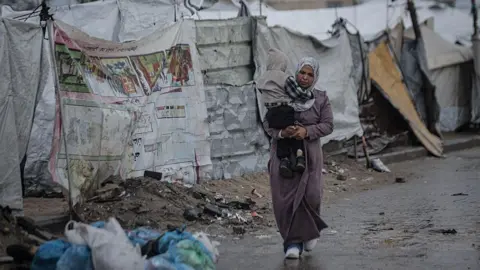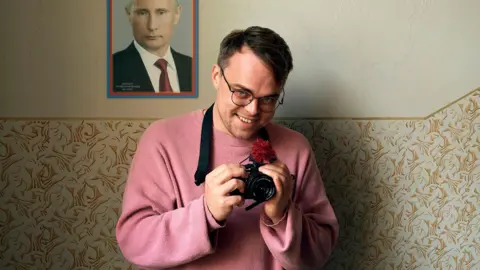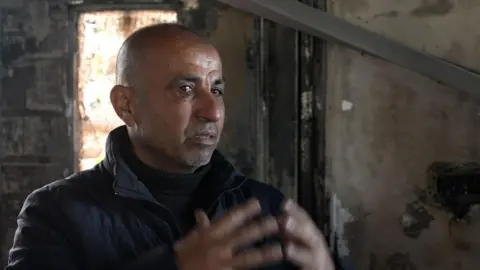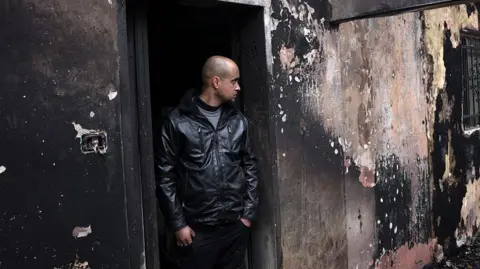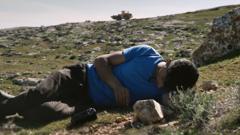
In the shadows of an Israeli army bulldozer, Basel Adra, a Palestinian filmmaker, is capturing the heart-wrenching struggles of his community in the West Bank. Alongside Israeli journalist Yuval Abraham, Basel turns his lens to the devastating impact of military actions in Masafer Yatta, where around 20 villages face constant threats of demolition under a controversial court ruling.
The film "No Other Land," which chronicles their friendship and the shared aspirations of a better future, has garnered significant recognition, receiving nominations for an Oscar and a Bafta for Best Documentary Feature. Their journey, documented over five years, addresses critical issues such as the destruction of homes and schools, the arrests of family members, and heartbreaking incidents of violence.
Despite the film's success in raising awareness, Yuval expressed concerns about the lack of tangible action among influential leaders to effect real change. "I know films can change individuals, and I believe they can be part of a larger movement toward transformation, which is urgently needed," he remarked.
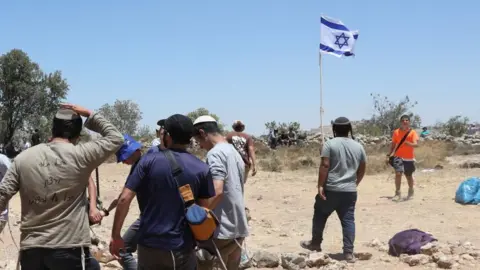
A deep-seated conflict underscores the film's narrative, as Israeli authorities insist on the legality of their actions while Palestinian figures recount their heritage in the contested territory. In response to the increased violence following a tragic escalation in Israel-Gaza tensions, the situation in the West Bank has deteriorated. Reports indicate a surge in settler violence, with UN figures revealing 13 Palestinian fatalities linked to such incidents.
The film does not shy away from the complexities of their relationship amid prevailing inequalities. As Yuval enjoys unrestricted access to various areas, Basel faces severe limitations, a stark reminder of the geopolitical divide. With the sentiments of guilt and responsibility weighing heavily on Yuval, he acknowledges the implications of his citizenship and its effect on his friendship with Basel.
Despite formidable challenges including backlash for openly discussing the situation in Gaza, Yuval and Basel are committed to sharing their stories. Highlighting a general failure of institutions worldwide to address the escalation of violence, both filmmakers agree that open dialogue and proactive measures are essential for moving forward.
With historical assertions of land use bubbling to the surface, including accusations of apartheid and colonial expansion, the documentary resonates with urgent relevance. The film captures emotional moments of resilience and hope, emphasizing that the fight for justice is not an isolated event, but rather a gradual process requiring collective effort.
As Basel continues to document the realities faced by his community, he embodies a shared sentiment: "One water drop doesn't make change, but keep dropping the water and it will make change."
The film "No Other Land," which chronicles their friendship and the shared aspirations of a better future, has garnered significant recognition, receiving nominations for an Oscar and a Bafta for Best Documentary Feature. Their journey, documented over five years, addresses critical issues such as the destruction of homes and schools, the arrests of family members, and heartbreaking incidents of violence.
Despite the film's success in raising awareness, Yuval expressed concerns about the lack of tangible action among influential leaders to effect real change. "I know films can change individuals, and I believe they can be part of a larger movement toward transformation, which is urgently needed," he remarked.
A deep-seated conflict underscores the film's narrative, as Israeli authorities insist on the legality of their actions while Palestinian figures recount their heritage in the contested territory. In response to the increased violence following a tragic escalation in Israel-Gaza tensions, the situation in the West Bank has deteriorated. Reports indicate a surge in settler violence, with UN figures revealing 13 Palestinian fatalities linked to such incidents.
The film does not shy away from the complexities of their relationship amid prevailing inequalities. As Yuval enjoys unrestricted access to various areas, Basel faces severe limitations, a stark reminder of the geopolitical divide. With the sentiments of guilt and responsibility weighing heavily on Yuval, he acknowledges the implications of his citizenship and its effect on his friendship with Basel.
Despite formidable challenges including backlash for openly discussing the situation in Gaza, Yuval and Basel are committed to sharing their stories. Highlighting a general failure of institutions worldwide to address the escalation of violence, both filmmakers agree that open dialogue and proactive measures are essential for moving forward.
With historical assertions of land use bubbling to the surface, including accusations of apartheid and colonial expansion, the documentary resonates with urgent relevance. The film captures emotional moments of resilience and hope, emphasizing that the fight for justice is not an isolated event, but rather a gradual process requiring collective effort.
As Basel continues to document the realities faced by his community, he embodies a shared sentiment: "One water drop doesn't make change, but keep dropping the water and it will make change."