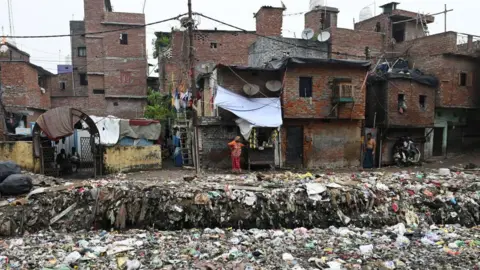
Want the royal charm of Jaipur? Don't come here, just buy a postcard, a local taxi driver quipped during my recent visit to the north-western Indian city of Jaipur. This reflection of urban decay reveals a complex problem plaguing many Indian cities, characterized by traffic congestion, air pollution, and overwhelming waste. Despite substantial national investments in infrastructure, livability indexes for these cities have stagnated or worsened.
In Bengaluru, public frustration boils over in response to the city's notorious traffic jams and rubbish-filled streets. In Mumbai, protests emerged against persistent pothole issues compounded by flooding. The air in Delhi poses a direct hazard to health, with smog levels prompting doctors to advise vulnerable populations to leave the capital.
Economists attribute these urban dilemmas not merely to population growth but to a historical lack of a robust governance model. The rapid urbanization—the World Bank estimates nearly 40% of India's population now resides in urban areas—has outpaced local governance structures, leaving city administrations without the necessary power or resource allocation.
Unlike China's highly centralized system, which allows local governments substantial authority and accountability for urban development, India’s local bodies remain weak and underfunded, further complicating the country's urban planning efforts. Efforts, such as the 74th Amendment intended to empower city governance, have been thwarted by vested interests that prevent meaningful decentralization.
Thus, while millions of tons of waste pile up and air quality deteriorates, the cycle of urban mismanagement continues largely unchecked. As experts like Ankur Bisen state, resolving these challenges is critical, but without accurate data and an effective governance framework, a real solution seems distant. The situation calls for a public awakening akin to historical moments of reckoning, pushing for a transformation in urban living standards across India's cities.
In Bengaluru, public frustration boils over in response to the city's notorious traffic jams and rubbish-filled streets. In Mumbai, protests emerged against persistent pothole issues compounded by flooding. The air in Delhi poses a direct hazard to health, with smog levels prompting doctors to advise vulnerable populations to leave the capital.
Economists attribute these urban dilemmas not merely to population growth but to a historical lack of a robust governance model. The rapid urbanization—the World Bank estimates nearly 40% of India's population now resides in urban areas—has outpaced local governance structures, leaving city administrations without the necessary power or resource allocation.
Unlike China's highly centralized system, which allows local governments substantial authority and accountability for urban development, India’s local bodies remain weak and underfunded, further complicating the country's urban planning efforts. Efforts, such as the 74th Amendment intended to empower city governance, have been thwarted by vested interests that prevent meaningful decentralization.
Thus, while millions of tons of waste pile up and air quality deteriorates, the cycle of urban mismanagement continues largely unchecked. As experts like Ankur Bisen state, resolving these challenges is critical, but without accurate data and an effective governance framework, a real solution seems distant. The situation calls for a public awakening akin to historical moments of reckoning, pushing for a transformation in urban living standards across India's cities.